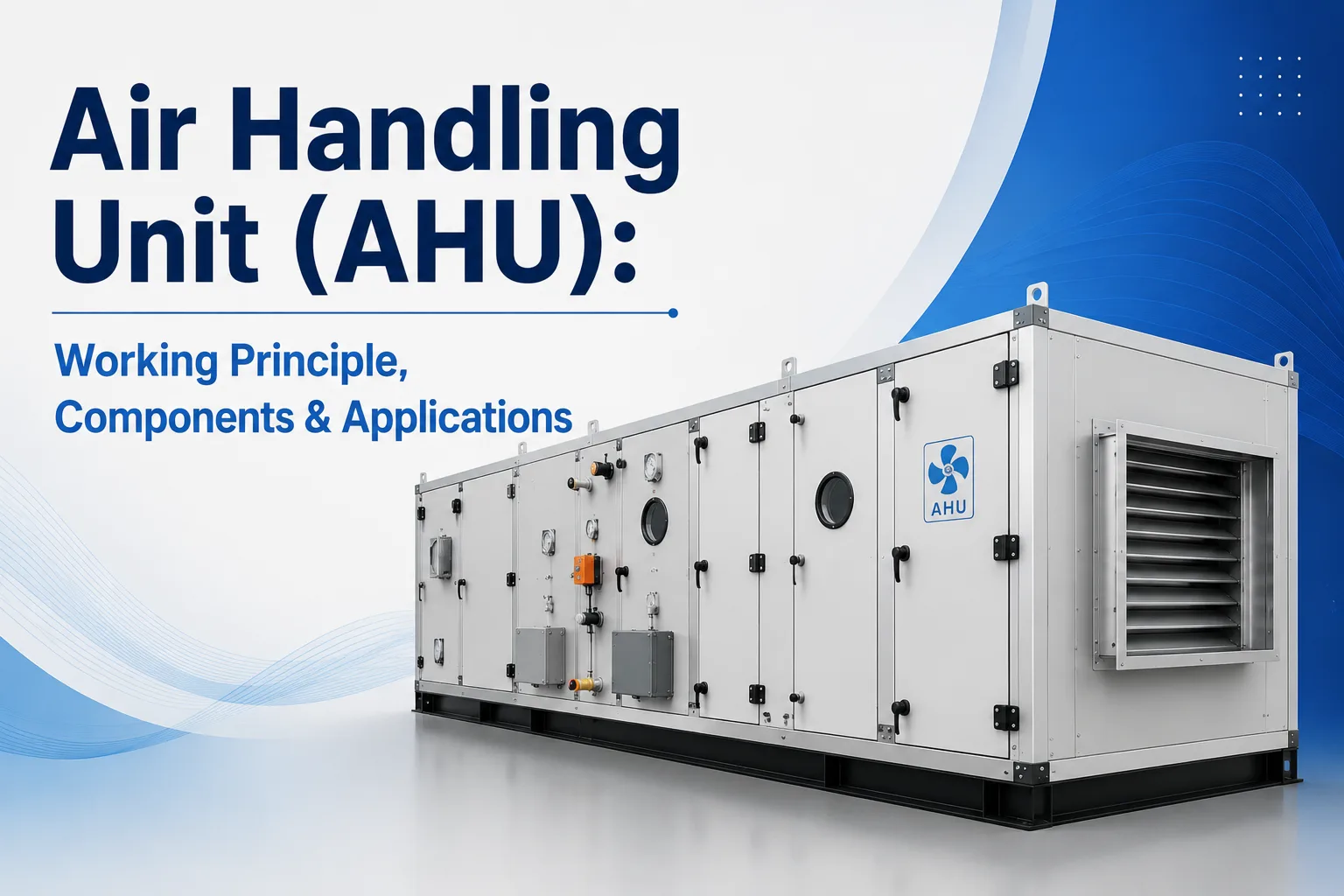
Air Handling Unit (AHU): Working Principle, Components & Applications
An Air Handling Unit (AHU) is a crucial component of modern HVAC (Heating, Ventilation, and Air Conditioning) systems. It is responsible for conditioning and circulating air throughout a building to maintain comfortable indoor temperatures, proper ventilation, and high indoor air quality. Air Handling Units are widely used in commercial buildings, hospitals, pharmaceutical facilities, shopping malls, educational institutions, hotels, and industrial plants.
As industries continue to focus on energy efficiency and healthy indoor environments, AHUs have become an essential part of building management systems.
What is an Air Handling Unit?
An Air Handling Unit is a mechanical device designed to regulate and circulate air as part of an HVAC system. It collects fresh air from outside or recirculates indoor air, filters contaminants, adjusts temperature and humidity levels, and distributes conditioned air through ductwork.
AHUs are available in various capacities and configurations to meet the specific requirements of different applications.
Main Components of an Air Handling Unit
1. Air Filters
Filters remove dust, dirt, pollen, and other airborne particles from the incoming air, improving indoor air quality and protecting HVAC equipment.
2. Blower or Fan
The fan is responsible for moving air through the AHU and distributing it throughout the building.
3. Cooling Coil
Cooling coils lower the air temperature by transferring heat from the air to chilled water or refrigerant.
4. Heating Coil
Heating coils warm the air during colder seasons to maintain desired indoor temperatures.
5. Humidifier or Dehumidifier
These components help control humidity levels, ensuring a comfortable indoor environment.
6. Mixing Chamber
The mixing chamber combines fresh outdoor air with return air from the building to achieve proper ventilation.
7. Dampers
Dampers regulate airflow and control the amount of fresh and return air entering the system.
Working Process of an Air Handling Unit
The operation of an AHU involves several stages that work together to provide clean and conditioned air.
Step 1: Air Intake
The AHU draws fresh outdoor air and mixes it with return air from the building. This helps maintain adequate ventilation while improving energy efficiency.
Step 2: Air Filtration
The incoming air passes through filters that remove dust, allergens, and contaminants. Clean air improves indoor air quality and enhances occupant comfort.
Step 3: Cooling or Heating
Depending on the building's requirements, the air passes through cooling coils or heating coils. Cooling coils reduce air temperature during summer, while heating coils warm the air during winter.
Step 4: Humidity Control
If required, the air passes through humidification or dehumidification systems to maintain optimal humidity levels.
Step 5: Air Distribution
The blower fan pushes the conditioned air through ducts and distributes it to different rooms and areas within the building.
Step 6: Air Return
After circulating through the building, a portion of the air returns to the AHU for recirculation, while some air is exhausted outside.
Types of Air Handling Units
Packaged AHU
A compact unit that contains all essential components within a single enclosure.
Modular AHU
Constructed from multiple sections, allowing customization according to application requirements.
Rooftop AHU
Installed on building rooftops to save indoor space.
Custom AHU
Specially designed to meet the unique requirements of specific industries and facilities.
Benefits of Air Handling Units
Improved Indoor Air Quality
Filters remove contaminants and provide cleaner air for occupants.
Energy Efficiency
Modern AHUs optimize airflow and temperature control, reducing energy consumption.
Enhanced Comfort
Maintains consistent temperature and humidity levels throughout the building.
Better Ventilation
Provides a continuous supply of fresh air while removing stale indoor air.
Reliable HVAC Performance
Supports efficient operation of the entire HVAC system.
Applications of Air Handling Units
AHUs are commonly used in:
- Commercial buildings
- Hospitals and healthcare facilities
- Pharmaceutical plants
- Food processing industries
- Hotels and resorts
- Shopping malls
- Educational institutions
- Manufacturing facilities
- Data centers
Importance of Choosing the Right AHU
Selecting the appropriate Air Handling Unit is essential for achieving optimal performance. Factors such as airflow capacity, filtration requirements, cooling load, humidity control, energy efficiency, and maintenance accessibility should be carefully considered.
A properly designed AHU helps reduce operating costs, improve indoor air quality, and extend the lifespan of HVAC equipment.
E India Connect – Connecting Buyers and Suppliers
Businesses looking for Air Handling Units, HVAC equipment, and industrial solutions can explore reliable manufacturers and suppliers through E India Connect, a leading B2B portal and marketplace. The platform helps buyers connect with verified suppliers across various industries, making it easier to compare products, request quotations, and find suitable HVAC solutions for their specific requirements.
With a wide network of manufacturers and service providers, E India Connect serves as a valuable marketplace for industrial sourcing and business networking.
Conclusion
An Air Handling Unit is a vital component of any HVAC system, ensuring efficient air circulation, filtration, temperature control, and ventilation. By understanding its components and working process, businesses can make informed decisions when selecting AHUs for their facilities. Properly designed and maintained AHUs contribute significantly to indoor comfort, energy efficiency, and overall building performance.