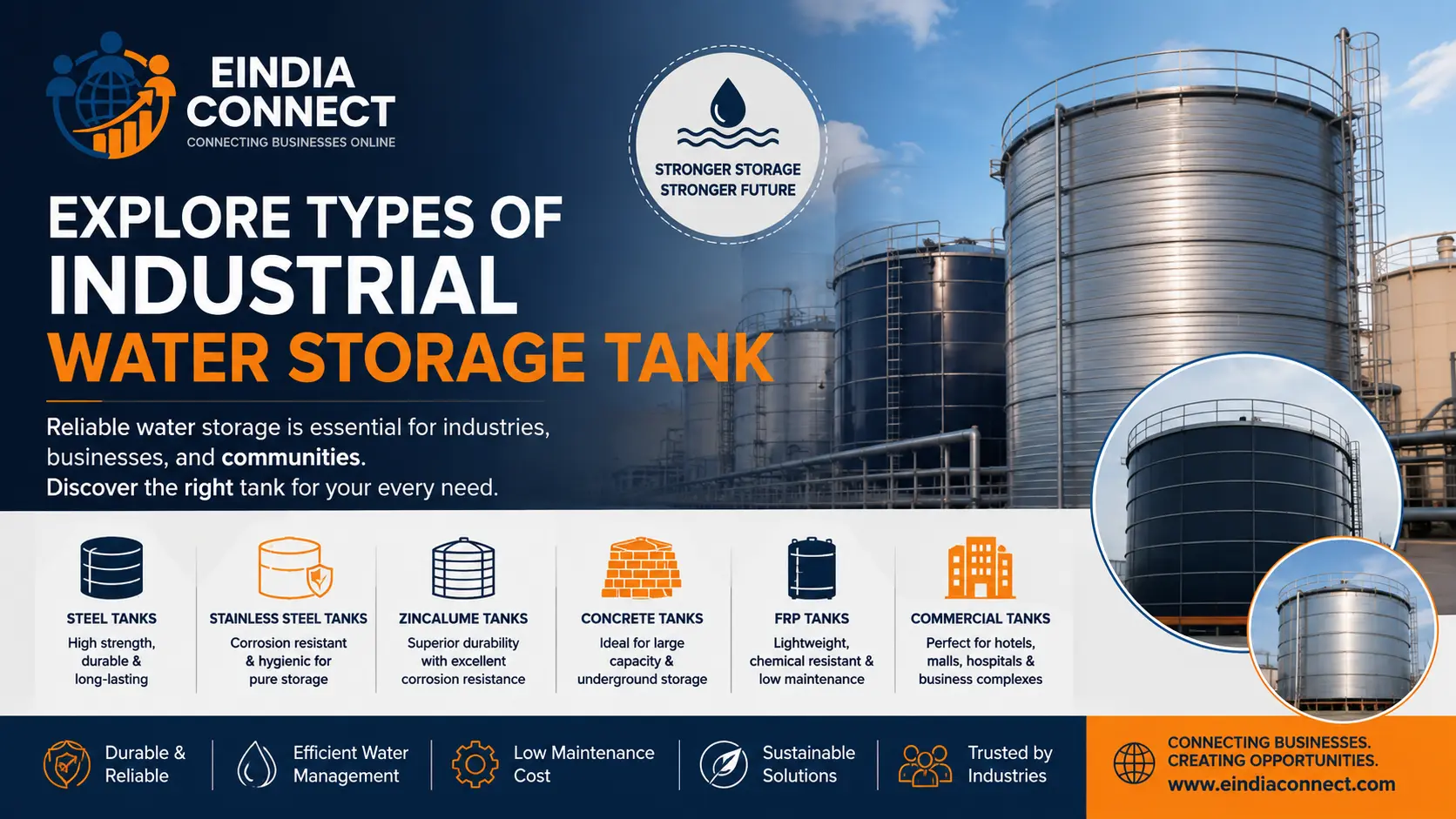
Explore Types of Industrial Water Storage Tank
Water is an important resource for industries, commercial establishments, municipalities, and infrastructure projects. Whether it is used for manufacturing, cooling, processing, firefighting, or daily operations, having a reliable water storage system is essential for uninterrupted performance. This is where industrial water storage tanks play a vital role. These tanks are specifically designed to store large quantities of water safely and efficiently while meeting the unique demands of different industries.
With advancements in tank manufacturing technologies and materials, businesses now have access to a wide range of storage solutions. Understanding the various types of water storage tanks can help industries choose the most suitable option based on their operational requirements.
In this blog, we will explain the different types of industrial water storage tanks, their applications, benefits, and factors to consider when selecting the right storage solution.
What Are Industrial Water Storage Tanks?
Industrial water storage tanks are large-capacity containers used to store water for industrial, commercial, and institutional applications. They are manufactured using different materials such as steel, stainless steel, Zincalume steel, fiberglass, and reinforced concrete, depending on the intended use and environmental conditions.
These tanks are designed to ensure a continuous water supply, support operational efficiency, and help organizations manage water resources effectively. Many businesses rely on high-quality industrial tanks to maintain productivity and meet regulatory requirements related to water storage and management.
Importance of Industrial Water Storage Tanks
Industries require significant amounts of water for various purposes, including:
- Manufacturing processes
- Cooling systems
- Boiler feed water
- Fire protection systems
- Cleaning and sanitation
- Wastewater treatment
- Rainwater harvesting
Without proper storage infrastructure, businesses may face operational disruptions, increased costs, and resource management challenges. This is why investing in durable and efficient industrial water tanks is essential.
Types of Industrial Water Storage Tanks
Different industries have different storage requirements. Below are some of the most commonly used types of water storage tanks.
Steel Water Storage Tanks
Steel tanks are among the most widely used storage solutions in industrial applications. These tanks offer excellent structural strength and long service life.
Benefits include:
- High durability
- Large storage capacity
- Resistance to harsh weather conditions
- Customizable designs
- Suitable for industrial and commercial projects
Steel-based industrial storage tank solutions are commonly used in manufacturing facilities, power plants, and municipal water systems.
Stainless Steel Water Tanks
Stainless steel tanks are preferred where water quality and hygiene are critical. These tanks provide superior corrosion resistance and help maintain water purity.
Advantages include:
- Excellent corrosion resistance
- Hygienic water storage
- Low maintenance requirements
- Long operational lifespan
Industries such as food processing, pharmaceuticals, and healthcare frequently utilize stainless steel water storage systems.
Zincalume Steel Water Tanks
Zincalume tanks have become increasingly popular due to their combination of strength and corrosion resistance.
Key benefits include:
- Enhanced durability
- Cost-effective operation
- Weather resistance
- Long-term performance
These tanks are suitable for industrial facilities, commercial buildings, and large-scale infrastructure projects.
Fiberglass Reinforced Plastic (FRP) Tanks
FRP tanks are lightweight and highly resistant to chemical corrosion.
Their advantages include:
- Easy installation
- Low maintenance
- Resistance to chemicals
- Lightweight construction
They are commonly used in chemical industries, wastewater treatment plants, and water purification facilities.
Concrete Water Tanks
Concrete tanks are often used when very large water storage capacities are required.
Features include:
- Exceptional structural stability
- Long lifespan
- Suitable for underground and above-ground installations
- Large storage volumes
Municipal water supply projects and large industrial facilities frequently utilize concrete storage systems.
Commercial Water Storage Tank Solutions
A commercial water storage tank is specifically designed to meet the water storage requirements of commercial establishments such as:
- Hotels
- Hospitals
- Shopping malls
- Educational institutions
- Office complexes
- Residential societies
Commercial facilities require reliable water availability to ensure smooth day-to-day operations. Modern storage systems are designed to provide safe and efficient water management while minimizing maintenance costs. Many businesses are now investing in modular storage systems that allow future expansion as water demand increases.
Applications of Industrial Water Tanks
The versatility of industrial water tanks makes them suitable for a wide range of industries.
- Manufacturing Industry- Manufacturing facilities require water for production processes, cooling systems, cleaning operations, and equipment maintenance.
- Power Plants- Power generation facilities depend on large volumes of water for cooling towers, boilers, and steam generation systems.
- Food and Beverage Industry- Safe and hygienic water storage is essential for maintaining product quality and meeting industry standards.
- Pharmaceutical Industry- Water purity is critical in pharmaceutical production, making advanced storage systems an important part of the manufacturing process.
- Agriculture and Irrigation- Large storage tanks support irrigation systems and ensure consistent water availability for agricultural operations.
- Fire Protection Systems- Many industrial facilities maintain dedicated storage tanks for firefighting and emergency response applications.
Factors to Consider When Choosing an Industrial Storage Tank
Selecting the right industrial storage tank requires careful evaluation of several factors.
- Storage Capacity- Determine the amount of water required for daily operations and future expansion.
- Material Selection- Choose materials based on environmental conditions, water quality requirements, and budget considerations.
- Installation Space- Available space often influences the size, shape, and configuration of the tank.
- Maintenance Requirements- Some materials require less maintenance than others, reducing long-term operational costs.
- Regulatory Compliance- Ensure the storage system meets applicable industry standards and local regulations.
- Durability and Lifespan- Investing in a durable storage solution provides better long-term value and reliability.
Benefits of Modern Industrial Water Storage Tanks
Today's storage technologies offer numerous advantages over traditional systems.
- Improved Water Management- Efficient storage helps businesses manage water resources more effectively.
- Enhanced Reliability- Modern tanks provide a continuous water supply even during shortages or interruptions.
- Reduced Operational Costs- Durable storage systems require less maintenance and fewer repairs.
- Water Conservation Support- Storage tanks facilitate rainwater harvesting and water recycling initiatives.
- Scalability- Many modern systems can be expanded as operational requirements grow.
These benefits make advanced industrial water storage tanks a valuable investment for businesses across multiple sectors.
How E India Connect Helps Businesses Find Water Storage Solutions
As a leading B2B business portal and marketplace, E India Connect helps buyers connect with trusted manufacturers, suppliers, and service providers across various industries.
Businesses searching for:
- Industrial water storage solutions
- Water tank manufacturers
- Storage tank suppliers
- Industrial equipment providers
- Infrastructure solutions
can easily find reliable partners through the platform.
The marketplace enables buyers to compare suppliers, evaluate product offerings, and connect directly with industry experts.
Future Trends in Water Storage Technology
The water storage industry continues to evolve with technological advancements focused on sustainability and efficiency.
Emerging trends include:
- Smart monitoring systems
- IoT-enabled water management
- Modular tank designs
- Advanced corrosion-resistant materials
- Rainwater harvesting integration
- Automated maintenance monitoring
These innovations are helping industries improve water management while reducing operational costs and environmental impact.
Conclusion
Water storage is a critical component of industrial and commercial operations. Choosing the right industrial water storage tanks ensures operational continuity, efficient resource management, and long-term reliability. From steel and stainless steel tanks to FRP and concrete solutions, businesses have access to a variety of storage options tailored to their specific needs.
Whether you are looking for durable industrial tanks, a high-capacity industrial storage tank, reliable industrial water tanks, or a dependable commercial water storage tank, understanding the available options can help you make an informed decision.
Through platforms like E India Connect, businesses can connect with trusted suppliers and manufacturers, making it easier to find the right water storage solutions for their projects and operational requirements.