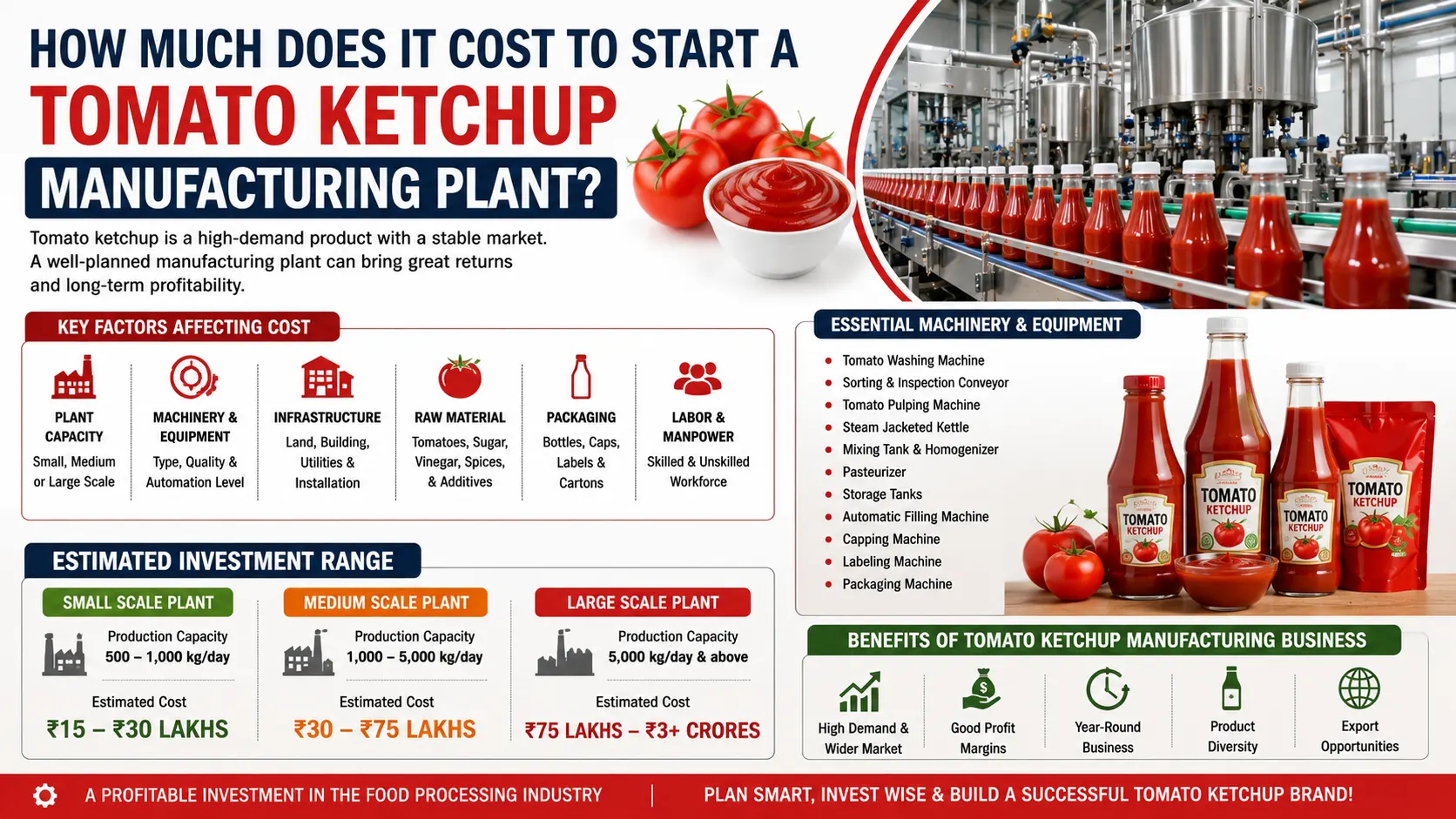
How Much Does It Cost to Start a Tomato Ketchup Manufacturing Plant?
Tomato ketchup is one of the most widely consumed food products worldwide and is used extensively in households, restaurants, hotels, fast-food chains, and catering businesses. With increasing demand for processed food products, tomato ketchup manufacturing has become a profitable business opportunity for entrepreneurs and food processing companies.
However, before entering this industry, understanding the cost of establishing a tomato ketchup plant is essential for proper planning and investment decisions. The overall project cost depends on factors such as plant capacity, machinery selection, raw material availability, automation level, and infrastructure requirements.
Growing Demand for Tomato Ketchup
The demand for tomato ketchup continues to rise due to changing consumer preferences and the growing popularity of convenience foods. Restaurants, cafes, food service providers, and packaged food manufacturers require large quantities of ketchup, creating significant opportunities for producers.
The food processing sector is also receiving support through various government initiatives that encourage value addition to agricultural products.
Factors Affecting Tomato Ketchup Plant Cost
Plant Capacity
The size of the production unit significantly influences the overall investment. Small-scale plants require lower capital investment, while medium and large-scale facilities need advanced machinery and larger infrastructure.
Land and Building
The cost of land and factory construction varies according to location and production capacity. A tomato ketchup plant generally requires space for:
- Raw material storage
- Processing area
- Packaging section
- Finished goods storage
- Utility area
Machinery and Equipment
A complete tomato ketchup manufacturing plant may include:
- Tomato Washing Machine
- Sorting and Inspection Conveyor
- Tomato Crusher or Pulper
- Steam Jacketed Kettle
- Mixing Tank
- Homogenizer
- Pasteurization Unit
- Storage Tanks
- Bottle Filling Machine
- Capping Machine
- Labeling Machine
- Packaging Equipment
Machinery costs generally represent a major portion of the total project investment.
Raw Materials
The primary raw materials include:
- Fresh Tomatoes
- Sugar
- Salt
- Vinegar
- Spices
- Preservatives
- Packaging Bottles and Caps
The availability and seasonal pricing of tomatoes can affect production costs.
Utilities and Infrastructure
Additional investment is required for:
- Water Supply System
- Electrical Installation
- Boiler System
- Waste Management System
- Laboratory Equipment
- Material Handling Equipment
Labor and Workforce
The plant requires skilled operators, quality control staff, packaging workers, supervisors, and maintenance personnel.
Estimated Investment Range
The cost of establishing a tomato ketchup plant can vary widely depending on scale and automation level:
- Small-scale unit: Moderate investment with semi-automatic machinery.
- Medium-scale plant: Higher investment with increased production capacity.
- Large-scale industrial plant: Significant investment with fully automated processing and packaging lines.
Entrepreneurs should prepare a detailed project report to determine the exact investment requirement based on production targets and market demand.
Benefits of Investing in a Tomato Ketchup Plant
Growing Market Demand
The expanding food processing and hospitality industries create a stable demand for ketchup products.
Value Addition to Agricultural Produce
Tomatoes can be converted into a higher-value processed product, improving profitability.
Year-Round Sales Potential
Tomato ketchup is consumed throughout the year across various market segments.
Business Expansion Opportunities
Manufacturers can diversify into related products such as sauces, chutneys, and food condiments.
Export Potential
Quality tomato ketchup products can find opportunities in international markets.
Key Considerations Before Setup
- Conduct market research
- Assess raw material availability
- Select suitable plant capacity
- Choose reliable machinery suppliers
- Ensure food safety compliance
- Develop a strong distribution network
- Plan efficient packaging and branding strategies
Best Platform to Get Reliable Tomato Ketchup Plant Suppliers: E India Connect
Businesses looking for tomato ketchup making machine, packaging equipment, raw material suppliers, and food processing solutions can explore E India Connect, a leading B2B portal and marketplace. The platform connects buyers with verified manufacturers, suppliers, exporters, and service providers across the food processing industry.
E India Connect helps entrepreneurs compare suppliers, request quotations, explore machinery options, and identify suitable business partners for establishing a tomato ketchup manufacturing plant.
Conclusion
The tomato ketchup manufacturing industry offers excellent opportunities due to increasing consumer demand, growth in the food service sector, and expanding processed food markets. While the cost of establishing a tomato ketchup plant depends on multiple factors such as capacity, machinery, infrastructure, and automation level, proper planning and investment can lead to a successful and profitable venture.
By leveraging trusted supplier networks through E India Connect, entrepreneurs can simplify the sourcing process and efficiently set up a modern tomato ketchup manufacturing facility.