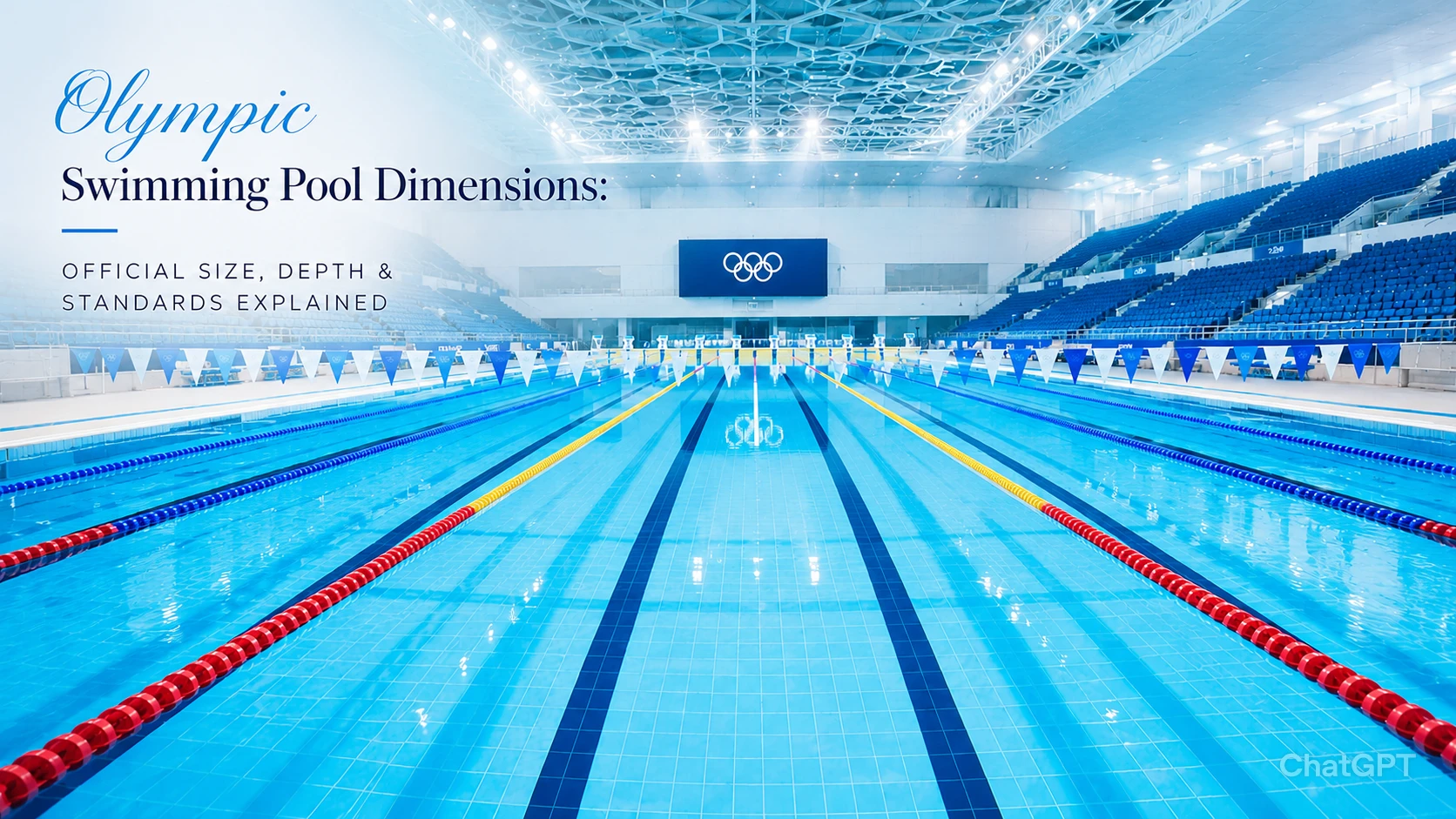
Olympic Swimming Pool Dimensions: Official Size, Depth & Standards Explained
Swimming is one of the most popular sports worldwide, and professional competitions require pools that meet strict international standards. Whether you are planning a sports complex, educational institution, club facility, or researching swimming infrastructure, understanding official swimming pool size standards is essential. Olympic and competition pools are carefully designed to ensure fairness, safety, and optimal performance for swimmers.
From the overall swimming pool length to water depth and lane dimensions, every aspect of a competition pool is regulated by international governing bodies. In this guide, we will explain the official dimensions, standards, and key differences between Olympic and semi-Olympic pools.
What Is an Olympic Swimming Pool?
An Olympic swimming pool is a competition-standard pool used for international swimming events, including the Olympic Games and world championships. These pools follow guidelines established by World Aquatics (formerly FINA) to ensure consistency across global competitions.
The official swimming pool size for Olympic events is designed to provide athletes with equal conditions regardless of where they compete. Precision in dimensions helps maintain fairness and accurate race timing.
Olympic Swimming Pool Dimensions
The standard Olympic swimming pool specifications include:
- Swimming Pool Length: 50 meters
- Width: 25 meters
- Number of Lanes: 10
- Lane Width: 2.5 meters
- Minimum Water Depth: 2 meters
- Recommended Depth for Major Events: 3 meters
- Water Temperature: 25°C to 28°C
The official swimming pool length of 50 meters is one of the most important requirements for Olympic-level competitions. This measurement allows athletes to compete under standardized conditions across all international venues.
Why Swimming Pool Size Matters
The dimensions of a pool directly influence swimming performance and competition accuracy. A properly designed swimming pool size helps minimize water turbulence, improve swimmer safety, and ensure reliable timing results.
Standardized pool dimensions provide several benefits:
- Fair competition conditions
- Accurate race measurements
- Improved swimmer performance
- Enhanced safety standards
- International event compliance
Because of these advantages, competition organizers strictly follow Olympic pool regulations.
Semi Olympic Swimming Pool Size
Not every facility has the space or budget required for a full Olympic pool. In such cases, many institutions choose a semi olympic swimming pool size configuration.
A semi-Olympic pool is generally:
- Length: 25 meters
- Width: 12.5 meters to 25 meters
- Multiple swimming lanes
- Suitable for training and local competitions
The semi olympic swimming pool size is widely used in schools, sports clubs, fitness centers, hotels, and recreational facilities. It provides excellent training opportunities while requiring less space and lower construction costs.
What Is a Semi Olympic Size Swimming Pool?
A semi olympic size swimming pool is essentially a half-length version of an Olympic pool. While it may not meet all international competition standards, it remains highly effective for swimming instruction, fitness activities, and regional events.
Many swimming academies prefer a semi olympic size swimming pool because it balances functionality, affordability, and maintenance requirements.
Benefits include:
- Lower construction costs
- Reduced water consumption
- Easier maintenance
- Suitable for training programs
- Ideal for educational institutions
Half Olympic Size Swimming Pool Explained:
A half olympic size swimming pool typically refers to a pool that is 25 meters long instead of the full Olympic standard of 50 meters.
The half olympic size swimming pool is commonly found in:
- Schools
- Universities
- Community sports centers
- Residential clubs
- Commercial fitness facilities
Although smaller than a full Olympic pool, it still supports competitive training and recreational swimming activities.
Many organizations choose a half olympic size swimming pool because it offers excellent functionality while reducing land and construction requirements.
Pool Depth Standards
While swimming pool length often receives the most attention, depth is equally important.
For Olympic competitions:
- Minimum depth: 2 meters
- Recommended depth: 3 meters
Deeper water helps reduce wave reflection and turbulence, allowing swimmers to achieve better performance. Modern competition facilities often exceed minimum depth requirements to create optimal racing conditions. For a semi olympic swimming pool size, depth requirements vary depending on usage, age groups, and facility objectives.
Lane Requirements for Competition Pools
Lane dimensions are another critical aspect of swimming pool size standards.
Olympic pools typically include:
- 10 lanes
- 2.5-meter lane width
- Buffer lanes on both sides
These specifications help minimize wave interference between swimmers and improve race fairness. Semi-Olympic facilities may have fewer lanes while maintaining appropriate lane widths for training and competitions.
Choosing the Right Pool Size
Selecting the right pool depends on several factors:
Available Space
A full Olympic pool requires significantly more land compared to a semi olympic size swimming pool.
Budget
Construction, operation, and maintenance costs increase with larger pool dimensions.
Intended Use
Consider whether the facility will be used for:
- Professional competitions
- Athlete training
- Swimming instruction
- Recreational activities
- Community programs
Future Expansion
Planning for future growth can help maximize the value of your investment.
Conclusion
Understanding Olympic swimming pool dimensions is essential for anyone involved in aquatic facility planning or sports infrastructure development. The official swimming pool length of 50 meters and standardized dimensions ensure fairness and consistency in international competitions.
As a trusted B2B Portal and Marketplace, E India Connect helps connect buyers with reliable swimming pool manufacturers, contractors, suppliers, and solution providers who offer professional services for Olympic, semi-Olympic, and customized swimming pool projects across various sectors.