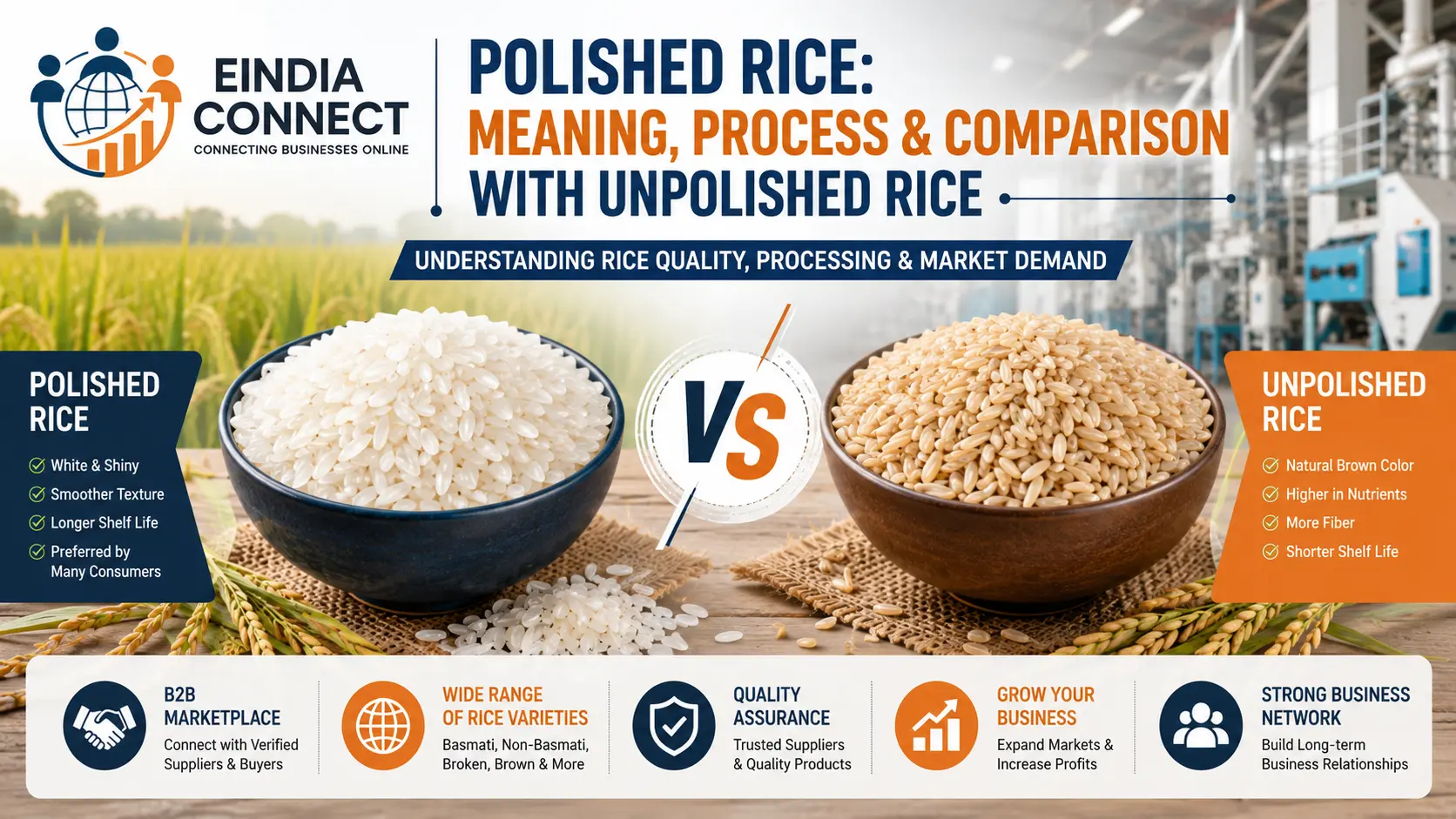
Polished Rice: Meaning, Process & Comparison with Unpolished Rice
Rice is a popular food grain that is widely eaten not only in India but in many other parts of the world as well. Being a staple diet for many people, rice has great significance for the agriculture industry as well as the food processing industry. For rice buyers, sellers, and manufacturers working in the B2B segment, knowledge about various types of rice is extremely important.
One of the frequent queries between the buyers and sellers relates to knowing what is polished rice and distinguishing it from unpolished rice. Knowledge of the definition of polished rice, as well as the process of polishing the product itself, will allow organizations to recognize the required items to sell.
In this blog, we will discuss polished rice, the rice polishing process, and a detailed comparison of polished rice vs unpolished rice from both nutritional and commercial perspectives.
What is Polished Rice?
Rice grains are naturally covered with an outer husk and bran layer. During milling, the husk is removed first to produce brown rice. When the bran layer and germ are further removed through polishing, the result is known as polished rice.
In simple terms, polished rice is rice that has undergone additional processing to achieve a smoother texture, brighter appearance, and longer shelf life. The polishing process gives rice its characteristic white and shiny look, which is preferred by many consumers worldwide.
Polished Rice Meaning
The polished rice meaning refers to rice that has been milled and polished to remove the bran and germ layers surrounding the grain. This process enhances the visual appearance of the rice and improves its storage characteristics.
Many consumers associate polished rice with cleanliness, softness, and uniform cooking quality. As a result, polished rice continues to dominate domestic and international rice markets.
For rice suppliers and distributors listed on B2B marketplaces such as E India Connect, polished rice remains one of the most traded agricultural commodities due to its widespread demand.
Understanding Rice Polish
The term rice polish refers to the fine layer removed from rice grains during the polishing stage. This layer primarily consists of bran particles and other outer grain components.
Rice polish itself has commercial value and is often utilized in:
- Animal feed production
- Poultry feed manufacturing
- Fish feed industries
- Oil extraction processes
- Agricultural applications
In the rice processing industry, rice polish is considered a valuable by-product that contributes to overall profitability.
How is Polished Rice Produced?
The production of polished rice involves several processing stages.
1. Cleaning
Freshly harvested paddy contains dust, stones, straw, and other impurities. These contaminants are removed using cleaning equipment.
2. De-Husking
The outer husk is removed from the paddy to produce brown rice.
3. Whitening
The bran layer covering the grain is removed through milling machines.
4. Polishing
The rice grains are polished using specialized machines that enhance their appearance and surface smoothness.
5. Grading and Sorting
The rice is sorted according to grain size, quality, and appearance.
6. Packaging
The finished polished rice is packed and distributed to wholesalers, retailers, exporters, and consumers. Modern rice mills use advanced polishing technology to ensure consistent quality and attractive grain appearance.
Why is Polished Rice Popular?
Several factors contribute to the popularity of polished rice in domestic and international markets.
- Attractive Appearance- The bright white color and smooth texture make polished rice visually appealing to consumers.
- Longer Shelf Life- Removing the bran layer reduces the oil content in the grain, helping increase storage stability.
- Easy Cooking- Polished rice generally cooks faster and produces a softer texture.
- Consumer Preference- Many regions prefer polished rice because of its taste, appearance, and cooking characteristics.
These advantages have helped polished rice maintain strong market demand across various countries.
Polished Rice vs Unpolished Rice
One of the most common comparisons in the rice industry is polished rice vs unpolished rice.
Although both originate from the same grain, their processing methods create significant differences.
Appearance
Polished Rice
- White and shiny appearance
- Smooth texture
- Uniform grain finish
Unpolished Rice
- Brown or slightly darker color
- Natural grain appearance
- Visible bran layer
Nutritional Content
Polished Rice
- Lower fiber content
- Reduced vitamins and minerals due to bran removal
- Softer texture after cooking
Unpolished Rice
- Higher fiber content
- Retains natural nutrients
- Contains more vitamins and minerals
Shelf Life
Polished Rice
- Longer shelf life
- Easier storage and transportation
Unpolished Rice
- Shorter shelf life due to natural oils in the bran layer
Market Demand
Polished Rice
- High demand in retail and export markets
- Preferred by many consumers
Unpolished Rice
- Growing demand among health-conscious consumers
Both categories have their own customer segments and market opportunities.
Commercial Importance of Polished Rice in B2B Trade
For businesses involved in rice trading, polished rice represents a major market opportunity.
Large-scale buyers include:
- Rice wholesalers
- Supermarkets
- Retail chains
- Food processing companies
- Hotels and restaurants
- Export houses
- Institutional buyers
Because polished rice is consumed on a large scale, it generates significant trade volumes within agricultural marketplaces.
B2B platforms such as E India Connect help connect rice manufacturers, suppliers, exporters, distributors, and buyers across India and international markets.
Opportunities for Rice Suppliers on E India Connect
As a leading B2B marketplace, E India Connect provides rice businesses with opportunities to expand their customer base and increase visibility.
Rice suppliers can:
- Showcase product varieties
- Connect with verified buyers
- Generate business inquiries
- Promote export-quality rice
- Expand distribution networks
- Build long-term business relationships
Whether dealing in polished rice, unpolished rice, basmati rice, or specialty rice varieties, suppliers can leverage digital marketplaces to reach potential customers more effectively.
Choosing Between Polished and Unpolished Rice
The choice between polished and unpolished rice largely depends on consumer preferences and market requirements.
Businesses should consider:
- Target customer segment
- Market demand
- Distribution channels
- Export requirements
- Pricing strategies
- Storage capabilities
Understanding these factors helps suppliers position their products effectively within competitive markets.
Future Trends in the Rice Industry
The rice industry continues to evolve with changing consumer preferences and technological advancements.
Some key trends include:
- Increased demand for premium rice varieties
- Growth in health-conscious consumer segments
- Expansion of rice exports
- Adoption of advanced rice milling technologies
- Rising importance of digital B2B marketplaces
Businesses that stay informed about these trends can gain a competitive advantage in the market.
Conclusion
Understanding what is polished rice, the polished rice meaning, and the role of rice polish is important for both buyers and sellers in the agricultural sector. The comparison of polished rice vs unpolished rice highlights the differences in appearance, nutritional value, shelf life, and market demand.
For rice traders, manufacturers, exporters, and wholesalers, polished rice remains one of the most commercially significant products in the food industry. Through platforms like E India Connect, businesses can connect with reliable suppliers and buyers, expand their market reach, and explore new opportunities in the growing agricultural marketplace.
As the demand for quality rice products continues to rise, understanding the processing and commercial aspects of rice can help businesses make smarter sourcing and trading decisions.