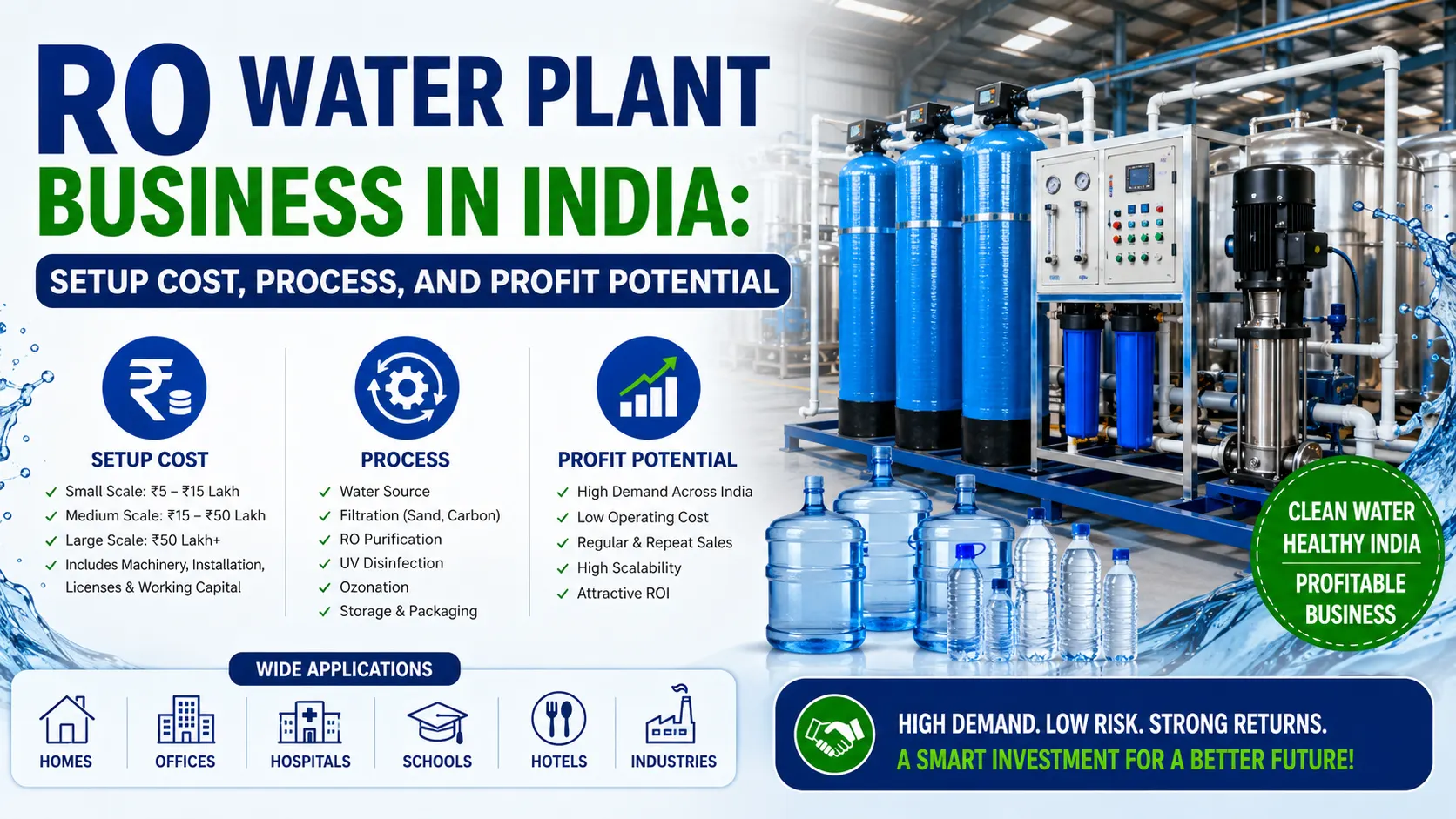
RO Water Plant Business in India: Setup Cost, Process, and Profit Potential
The demand for clean and safe drinking water is growing rapidly across India. Increasing urbanization, water pollution, and rising health awareness have created significant opportunities for entrepreneurs interested in the water purification industry. Starting an RO (Reverse Osmosis) water plant business can be a profitable venture with long-term growth potential.
Whether you plan to supply packaged drinking water, jars, bottles, or bulk purified water, an RO water plant can help meet the increasing demand for quality drinking water while generating a sustainable income.
What is an RO Water Plant?
An RO water plant is a water purification system that uses Reverse Osmosis technology to remove impurities, dissolved salts, bacteria, viruses, and other contaminants from water. The purified water is then processed, stored, and packaged for commercial distribution.
RO water plants are commonly used by:
- Packaged drinking water manufacturers
- Commercial establishments
- Residential societies
- Hospitals and healthcare facilities
- Educational institutions
- Hotels and restaurants
- Industrial facilities
Why Start an RO Water Plant Business?
India's drinking water market continues to expand due to increasing concerns about water quality and public health. Consumers are willing to pay for purified drinking water, creating a strong business opportunity for new entrepreneurs.
Benefits of Starting an RO Water Plant
- Growing demand for purified drinking water
- Consistent customer base
- High scalability
- Recurring revenue opportunities
- Relatively low operating costs
- Long-term business sustainability
- Strong market demand in urban and rural areas
RO Water Plant Setup Process
Setting up an RO water plant requires proper planning, infrastructure, machinery, and regulatory approvals.
1. Market Research
Before investing, analyze the local demand for drinking water. Study competitors, pricing, customer preferences, and distribution channels in your target market.
2. Select a Suitable Location
Choose a location with:
- Easy transportation access
- Reliable water source
- Electricity availability
- Adequate storage space
- Compliance with local regulations
3. Water Testing
Conduct laboratory testing of the raw water source to determine contamination levels and select the appropriate purification system.
4. Install RO Plant Machinery
The major equipment required includes:
- Raw water storage tank
- Sand filter
- Activated carbon filter
- Water softener
- Reverse Osmosis system
- UV sterilization unit
- Ozonation system
- Storage tanks
- Filling and packaging machines
5. Obtain Licenses and Certifications
Depending on your business model, you may require:
- Business registration
- FSSAI License
- BIS Certification (for packaged drinking water)
- GST Registration
- Local municipal approvals
- Pollution control permissions (if applicable)
6. Packaging and Distribution
Develop an efficient packaging and delivery system to supply purified water to households, offices, retailers, hotels, and institutions.
RO Water Plant Setup Cost in India: Estimated
The investment required depends on plant capacity, automation level, location, and packaging requirements.
Small Scale Plant
- Capacity: 500–1000 LPH
- Estimated Investment: ₹5 lakh to ₹15 lakh
Medium Scale Plant
- Capacity: 1000–5000 LPH
- Estimated Investment: ₹15 lakh to ₹50 lakh
Large Scale Commercial Plant
- Capacity: Above 5000 LPH
- Estimated Investment: ₹50 lakh to ₹2 crore or more
The overall cost includes machinery, installation, infrastructure, licenses, storage tanks, packaging equipment, and working capital.
Operational Expenses
Running an RO water plant involves several recurring expenses:
- Electricity consumption
- Labor costs
- Water source charges
- Maintenance and servicing
- Packaging materials
- Transportation and logistics
- Marketing and promotion
Efficient management of these costs directly impacts profitability.
Profit Potential of an RO Water Plant Business
The profit potential depends on production capacity, water quality, market demand, and distribution efficiency.
Factors affecting profitability include:
- Number of customers
- Selling price
- Daily production volume
- Distribution network
- Brand reputation
- Operational efficiency
With proper planning and a strong customer base, many RO water plant businesses achieve attractive returns on investment within a few years of operation.
Challenges in the RO Water Industry
While the business offers significant opportunities, entrepreneurs should be aware of certain challenges:
- Competition from established brands
- Regulatory compliance requirements
- Water source management
- Equipment maintenance
- Transportation costs
- Quality control standards
Maintaining consistent water quality is essential for building customer trust and long-term business success.
Marketing Your RO Water Plant Business
Effective marketing can help attract customers and grow your business.
Some popular marketing strategies include:
- Local advertising
- Digital marketing
- Social media promotion
- Dealer and distributor networks
- Partnerships with hotels and offices
- Online business directories
- B2B marketplace listings
E India Connect – B2B Portal and Marketplace for Business Growth
For entrepreneurs looking to promote their RO water plant business, E India Connect serves as a valuable B2B portal and online marketplace. The platform helps manufacturers, suppliers, service providers, and business owners connect with potential buyers across various industries.
By listing products and services on E India Connect, businesses can increase their online visibility, generate quality leads, and expand their market reach. The platform acts as a bridge between buyers and sellers, making it easier for businesses to showcase their offerings and establish new commercial relationships.
For companies operating in the water treatment and purification sector, E India Connect provides an excellent opportunity to reach customers searching for RO water plants, purification systems, packaging machinery, and related solutions.
Conclusion
The RO water plant business offers significant growth opportunities in India due to the increasing demand for safe and purified drinking water. With proper planning, quality equipment, regulatory compliance, and effective marketing strategies, entrepreneurs can build a successful and profitable business in this sector.
Investing in the right infrastructure and developing a strong distribution network can help ensure long-term success. Additionally, leveraging platforms like E India Connect, a trusted B2B portal and marketplace, can help businesses connect with potential customers and accelerate their growth in the competitive water purification industry.