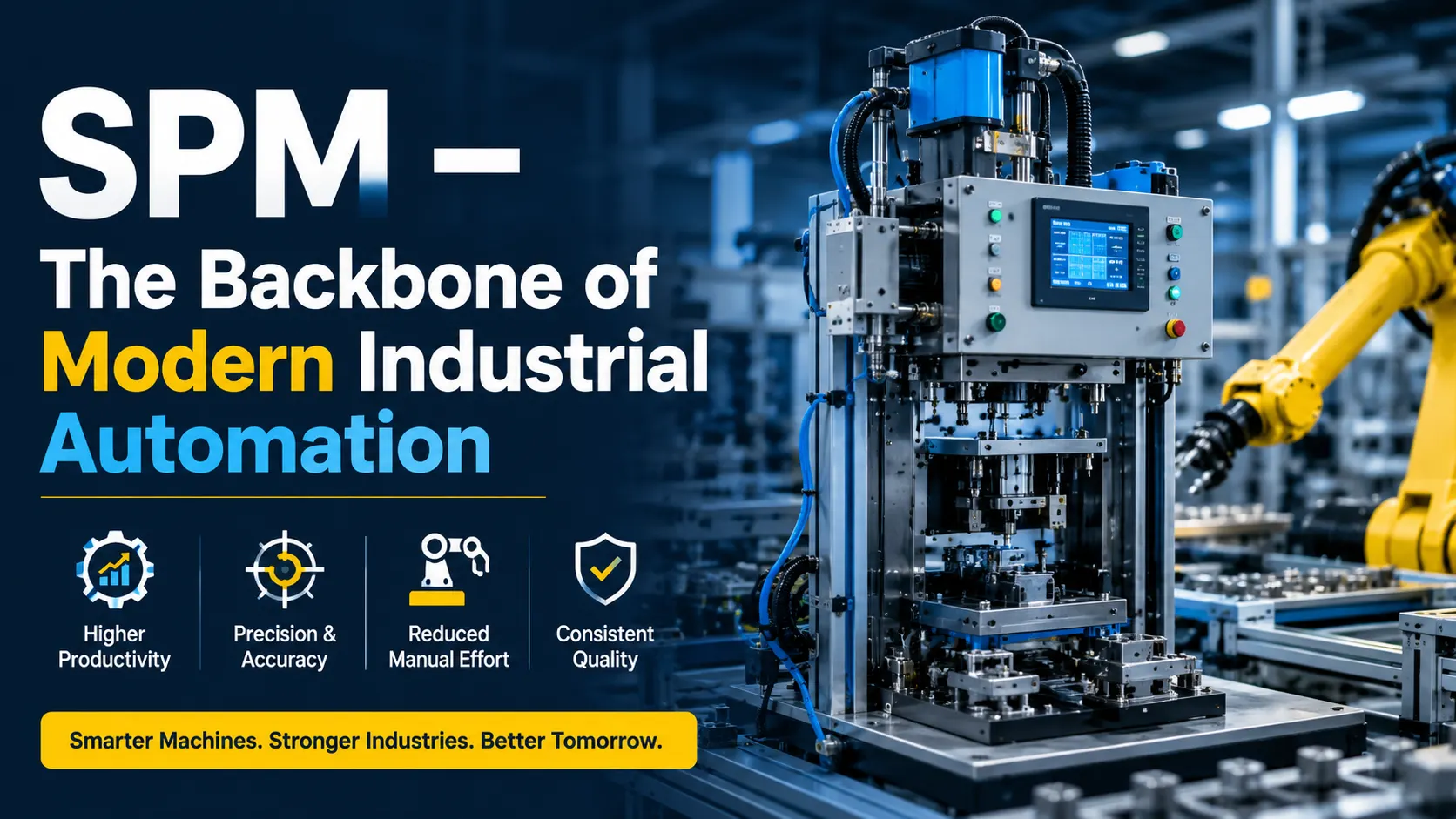
SPM – The Backbone of Modern Industrial Automation
One of the most important innovations driving industrial growth is the use of SPM machines. These specialized machines have transformed manufacturing processes by reducing manual effort, increasing production speed, and ensuring consistent quality. As industries continue to embrace automation, SPM has become a crucial component of modern industrial operations.
As a trusted B2B Portal and Marketplace, E India Connect helps businesses connect with leading manufacturers, suppliers, and service providers who offer and provide advanced industrial machinery, automation solutions, and engineering equipment.
What is SPM?
The SPM full form is Special Purpose Machine. These machines are specifically designed and developed to perform a particular operation or set of operations efficiently. Unlike conventional machines that can handle multiple tasks, SPMs are customized to meet specific production requirements.
The full form of SPM reflects its purpose perfectly. These machines are engineered for dedicated applications where speed, precision, and productivity are critical. They are commonly used in automotive, aerospace, electrical, electronics, pharmaceutical, and heavy engineering industries.
Why SPM Machines Are Important
Modern industries face increasing pressure to deliver high-quality products while reducing production time and operational expenses. This is where SPM machines play a significant role.
These machines are designed to:
- Increase production capacity
- Improve product quality
- Reduce labor dependency
- Minimize human errors
- Enhance workplace safety
- Lower manufacturing costs
By automating repetitive operations, SPMs help manufacturers focus on efficiency and consistency.
Features of Special Purpose Machines
The popularity of SPMs in industrial automation is due to their unique advantages.
- Customized Design: Every Special Purpose Machine is designed according to a customer's production requirements.
- High Productivity: Since the machine is dedicated to a specific task, it can perform operations much faster than conventional machines.
- Precision and Accuracy: SPMs deliver highly accurate results, making them suitable for industries where precision is essential.
- Reduced Manual Intervention: Automation minimizes the need for continuous human involvement, reducing errors and increasing safety.
- Consistent Quality: One of the biggest advantages of SPMs is their ability to maintain consistent product quality throughout production cycles.
Applications of SPM Machines
The SPM full form may be simple, but its applications are vast and impactful.
- Automotive Industry: SPMs are widely used for drilling, tapping, welding, assembly, and component manufacturing in automobile production plants.
- Aerospace Industry: Precision machining and assembly processes in aerospace manufacturing often rely on Special Purpose Machines.
- Electronics Industry: SPMs help manufacture electronic components with high accuracy and speed.
- Pharmaceutical Industry: Specialized machines automate packaging, filling, labeling, and inspection processes.
- Heavy Engineering: Industries involved in large-scale equipment manufacturing use SPMs for repetitive and complex machining operations.
Advantages of Using SPM Machines
Businesses investing in SPM technology enjoy several operational benefits.
- Increased Efficiency: Machines perform repetitive tasks faster and more accurately than manual operations.
- Lower Production Costs: Reduced labor requirements and improved productivity help lower overall manufacturing expenses.
- Improved Product Quality: Consistent production standards reduce defects and improve customer satisfaction.
- Faster Production Cycles: Automated systems significantly shorten production timelines.
- Better Resource Utilization: Manufacturers can optimize workforce allocation while maximizing machine output.
SPM and Industrial Automation
Industrial automation continues to reshape modern manufacturing, and SPM machines play a central role in this transformation.
The spm full form in engineering is closely linked to automation because these machines are often integrated with advanced technologies such as:
- PLC (Programmable Logic Controller) systems
- CNC controls
- Robotics
- Sensors and monitoring systems
- Artificial Intelligence applications
- Industry 4.0 technologies
These integrations allow manufacturers to achieve smarter, more efficient, and highly productive operations.
How E India Connect Supports Industrial Businesses
Finding reliable machinery suppliers can be challenging for businesses looking to upgrade their production capabilities. E India Connect, a trusted B2B Portal and Marketplace, bridges this gap by connecting buyers with verified manufacturers and suppliers across India.
The platform helps industries discover automation solutions, engineering equipment, and industrial machinery from trusted vendors. Through its extensive network, E India Connect enables businesses to compare products, evaluate suppliers, and make informed purchasing decisions.
Manufacturers and suppliers listed on the platform offer a wide range of industrial solutions, including Special Purpose Machines, CNC equipment, automation systems, fabrication machinery, and customized engineering products.
Conclusion
The SPM full form, or Special Purpose Machine, represents one of the most important advancements in modern manufacturing. Whether discussing the full form of SPM, the spm full form in engineering, or the spm full form in machine technology, these machines are designed to enhance productivity, precision, and operational efficiency.
As industries continue to embrace automation, SPMs remain the backbone of modern industrial production. Their ability to perform specialized tasks with speed and accuracy makes them an invaluable asset for manufacturers seeking growth and competitiveness. Through platforms like E India Connect, businesses can easily connect with suppliers who offer innovative SPM solutions that support industrial success and long-term productivity.