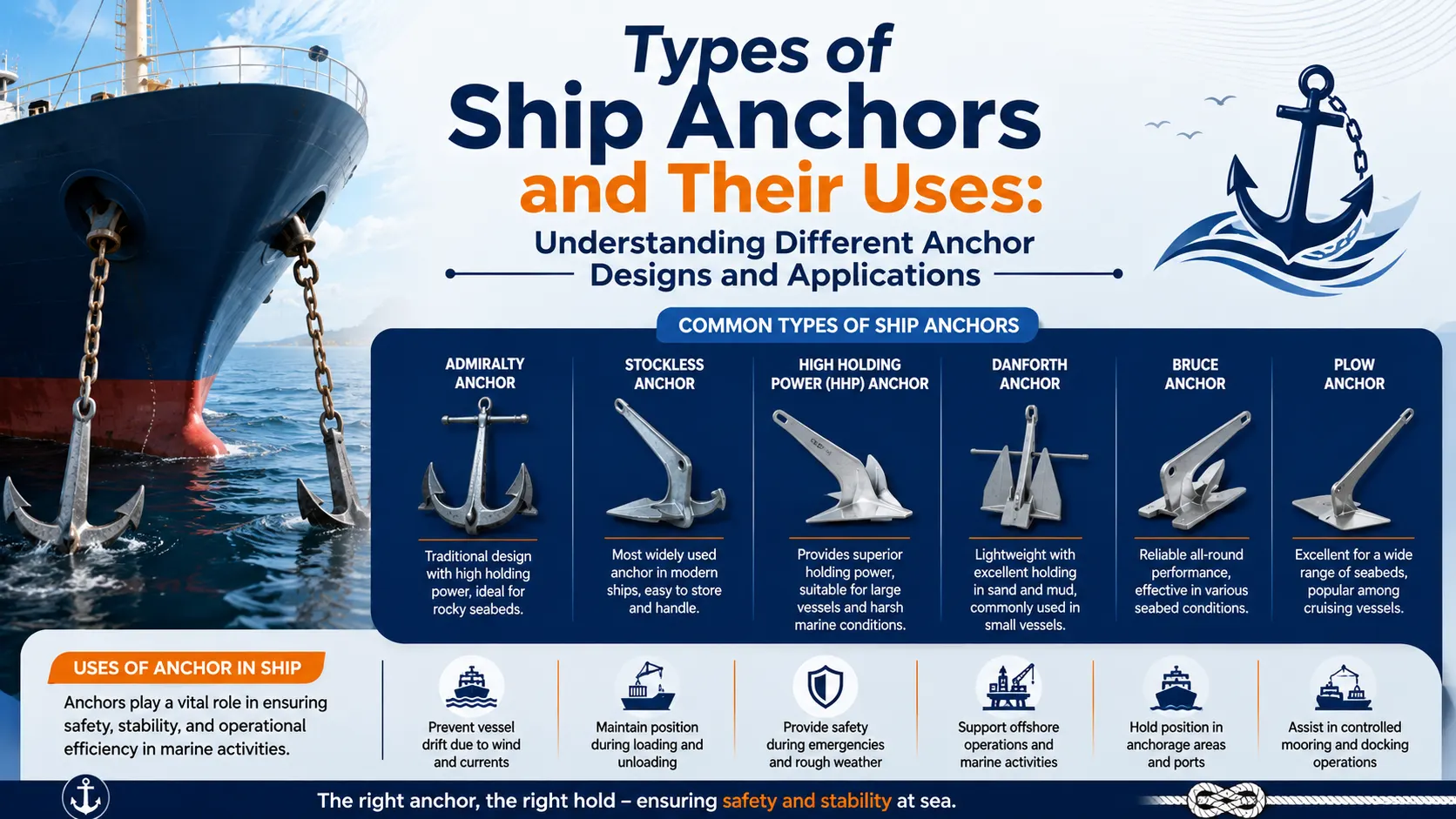
Types of Ship Anchors and Their Uses: Understanding Different Anchor Designs and Applications
An anchor in ship operations plays a critical role in keeping a vessel secure when it is not underway. Whether a ship is waiting at a port, operating offshore, or taking shelter during rough weather, the ship anchor provides the holding power necessary to prevent unwanted movement.
Understanding the types of anchor in ship applications helps ship owners, marine engineers, and operators select the right anchoring system for different environments and operational requirements. As a leading B2B Portal and marketplace, E India Connect helps businesses connect with reliable marine anchor equipment suppliers who offer quality anchoring solutions for the maritime sector.
What is an Anchor in a Ship?
An anchor is a heavy metal device designed to grip the seabed and hold a vessel in a fixed position. It is attached to the ship through an anchor chain or rope and is lowered to the ocean floor when anchoring is required.
The effectiveness of an anchor depends on its design, weight, seabed conditions, and the length of chain deployed. Different anchor designs are developed to suit varying marine environments and vessel types.
What is the Use of Anchor in Ship?
The use of anchors in ship operations goes far beyond simply stopping a vessel. Anchors are essential safety devices that help ships maintain their position in open waters and ports.
Some key purposes include:
- Preventing vessel drift caused by wind and currents
- Maintaining stability during loading and unloading operations
- Providing safety during emergencies
- Supporting offshore construction and marine activities
- Holding ships in designated anchorage areas
- Assisting vessels when waiting for docking clearance
Without an effective anchor system, ships would face significant challenges in maintaining safe positions, especially during adverse weather conditions.
Types of Anchor in Ship
There are several types of anchor in ship applications, each designed to perform efficiently under specific operating conditions.
- Admiralty Anchor: The Admiralty Anchor is one of the oldest and most recognizable anchor designs. It features a central shank, two arms, and a stock positioned at right angles.
- Stockless Anchor: The Stockless Anchor is the most commonly used anchor on modern merchant ships. It features pivoting flukes that allow it to dig into the seabed effectively while being easy to store in the ship's hawse pipe. This anchor is considered a standard solution in commercial shipping operations.
- High Holding Power (HHP) Anchor: The High Holding Power anchor provides significantly greater holding force compared to conventional anchors of the same weight.
- Danforth Anchor: The Danforth Anchor features large flat flukes that provide excellent grip in soft seabeds such as sand and mud.
- Bruce Anchor: Also known as the Claw Anchor, the Bruce Anchor has become popular due to its ability to reset itself when wind or current direction changes.
- Plow Anchor: The Plow Anchor resembles an agricultural plow and is designed to dig deeply into the seabed.
Types of Anchoring
Apart from anchor designs, understanding types of anchoring methods is equally important in maritime operations.
1. Single Anchor Mooring
A single anchor is deployed from the bow of the vessel to hold position.
Common Uses:
- General anchorage operations
- Harbor waiting areas
2. Double Anchoring
Two anchors are deployed at different angles to provide additional holding power.
Common Uses:
- Congested anchorages
- Strong current conditions
3. Running Moor
This method uses anchors to position vessels accurately in restricted areas.
Common Uses:
- Port operations
- Docking assistance
4. Offshore Anchoring
Specialized anchoring systems are used for offshore platforms and support vessels.
Common Uses:
- Oil and gas installations
- Marine construction projects
Factors Affecting Anchor Selection
Choosing the right anchor depends on several factors:
1. Vessel Size
Larger ships require anchors with greater holding power and stronger chains.
2. Seabed Conditions
Different seabed types affect anchor performance.
Examples include:
- Sand
- Mud
- Gravel
- Rock
3. Weather Conditions
Areas with strong winds and currents may require High Holding Power anchors.
4. Operational Requirements
Commercial ships, offshore vessels, and recreational boats often require different anchoring solutions.
Understanding the various types of anchor in ship operations is essential for ensuring maritime safety and operational efficiency. From traditional Admiralty Anchors to advanced High Holding Power designs, each anchor serves a specific purpose based on vessel requirements and environmental conditions.
The use of anchors in ship operations remains one of the most critical aspects of marine navigation, helping vessels maintain stability and safety in diverse situations. Additionally, knowledge of different types of anchoring methods allows operators to choose the most effective solution for their specific needs.
As a trusted B2B Portal and marketplace, E India Connect helps businesses connect with reliable suppliers who offer and provide high-quality marine equipment, anchoring systems, and maritime solutions for the shipping industry.