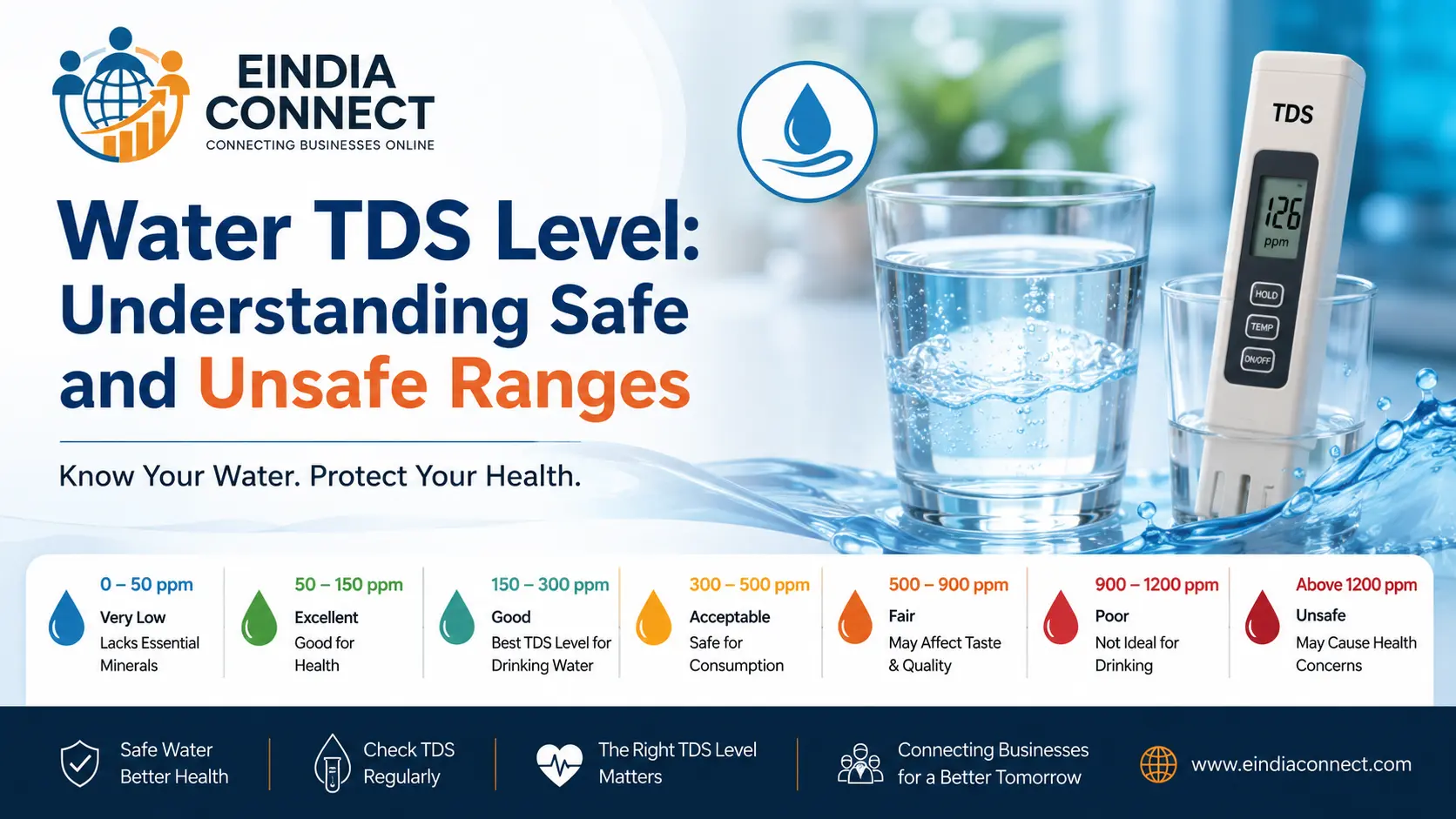
Water TDS Level: Understanding Safe and Unsafe Ranges
Water is important for life; however, not all waters can be deemed fit for human consumption. The first thing that is considered when determining the quality of any water is the amount of Total Dissolved Solids (TDS). No matter whether you drink water from the tap, from a filtration system, from a bottle, or even underground, you should know the TDS value.
Many people often wonder about the ideal drinking water TDS range and whether lower or higher TDS levels are better. While TDS is not the only indicator of water quality, it provides valuable insights into the concentration of dissolved minerals and impurities present in water.
In this blog, we will explore what TDS means, the recommended tds range for drinking water, safe and unsafe levels, and why monitoring water quality is important for health and well-being.
What Is TDS in Water?
TDS stands for Total Dissolved Solids. It refers to the combined amount of inorganic salts, minerals, metals, and organic substances dissolved in water. These dissolved solids may include:
- Calcium
- Magnesium
- Potassium
- Sodium
- Chlorides
- Sulfates
- Bicarbonates
TDS is typically measured in parts per million (ppm) or milligrams per liter (mg/L).
The tds level of water can vary depending on the source. For example, groundwater generally contains higher TDS due to prolonged contact with soil and rocks, while rainwater usually has a much lower TDS level.
Why Is TDS Important?
TDS plays an important role in determining the taste, quality, and usability of water. Water with an appropriate mineral balance often tastes better and provides essential minerals needed by the human body.
Monitoring the tds value for drinking water helps identify whether water contains excessive dissolved substances that could affect health, taste, or safety.
However, it is important to understand that TDS alone does not indicate whether water is contaminated with harmful bacteria or viruses. It should be considered alongside other water quality parameters.
Understanding the Drinking Water TDS Range
The acceptable drinking water TDS range varies according to international and national water quality standards. Different organizations recommend different limits, but the following ranges are generally accepted:
| TDS Level (ppm) | Water Quality |
|---|---|
| Below 50 | Very low mineral content |
| 50 – 150 | Excellent |
| 150 – 300 | Good |
| 300 – 500 | Acceptable |
| 500 – 900 | Fair |
| 900 – 1200 | Poor |
| Above 1200 | Unsuitable for drinking |
Most experts consider water within the range of 150–300 ppm to be ideal because it contains a balanced amount of essential minerals while maintaining good taste.
Best TDS Level for Drinking Water
Many people ask about the best TDS level for drinking water. The answer depends on mineral composition and personal preference, but generally:
- 150–300 ppm is considered ideal.
- 50–150 ppm is excellent and suitable for daily consumption.
- Below 50 ppm may lack essential minerals.
- Above 500 ppm may affect taste and indicate excessive dissolved solids.
Water with a moderate mineral content often tastes refreshing and supports healthy hydration.
The best TDS level for drinking water should strike a balance between purity and beneficial minerals.
What Happens When TDS Is Too Low?
While many people assume lower TDS is always better, extremely low TDS levels can have certain drawbacks.
Water with very low TDS may:
- Taste flat or bland
- Lack essential minerals such as calcium and magnesium
- Be more corrosive to pipes and plumbing systems
- Provide less nutritional value
Reverse Osmosis (RO) systems can sometimes reduce TDS to extremely low levels. This is why many modern water purifiers include mineral cartridges that help restore beneficial minerals.
What Happens When TDS Is Too High?
A high tds level often indicates the presence of excessive dissolved substances in water.
Potential concerns associated with high TDS include:
- Unpleasant Taste- Water with high TDS may taste salty, bitter, or metallic depending on the dissolved minerals present.
- Scaling Problems- Excess minerals can accumulate in pipes, water heaters, and household appliances, reducing their efficiency.
- Health Concerns- Although not all dissolved solids are harmful, very high TDS levels may indicate the presence of unwanted contaminants that require further testing.
- Reduced Water Quality- Extremely high TDS levels can negatively impact the overall quality and usability of water.
For this reason, regular water testing is recommended to maintain safe drinking water standards.
TDS Value for Drinking Water According to Standards
The recommended tds value for drinking water varies slightly depending on regional guidelines.
In India, the Bureau of Indian Standards (BIS) generally recommends:
- Desirable limit: 500 ppm
- Permissible limit (in the absence of an alternate source): 2000 ppm
However, water below 500 ppm is generally preferred for drinking purposes due to better taste and quality.
It is important to note that water quality should not be judged solely by TDS readings. Comprehensive testing may also include microbial, chemical, and physical parameters.
How Is TDS Measured?
TDS is measured using a digital TDS meter, which provides a quick and convenient reading of dissolved solids in water.
The process involves:
- Collecting a water sample.
- Inserting the TDS meter probe into the sample.
- Waiting for the reading to stabilize.
- Recording the TDS value displayed on the device.
TDS meters are widely used in homes, laboratories, water treatment plants, and industrial facilities.
Factors Affecting TDS Levels
Several factors can influence the tds range of water:
- Source of Water- Groundwater typically contains higher dissolved mineral content than surface water.
- Geological Conditions- Water flowing through mineral-rich soil and rocks naturally absorbs dissolved substances.
- Industrial Activities- Industrial discharges can increase dissolved solids in nearby water sources.
- Agricultural Runoff- Fertilizers and chemicals may contribute to higher TDS levels.
- Water Treatment Methods- Processes such as Reverse Osmosis can significantly reduce TDS levels. Understanding these factors helps in selecting appropriate water treatment solutions.
How to Reduce High TDS Levels
When water contains excessive dissolved solids, treatment methods may be required.
Common solutions include:
Reverse Osmosis (RO)
RO systems effectively remove dissolved salts, minerals, and impurities.
Distillation
This process separates dissolved solids through evaporation and condensation.
Deionization
Used mainly in industrial applications to remove ionized minerals.
Advanced Filtration Systems
Modern filtration technologies can help improve water quality and reduce excessive TDS.
Choosing the right treatment method depends on the water source and contamination level.
Importance of Water Quality Monitoring
Regular monitoring of the tds value for drinking water helps ensure that water remains safe, healthy, and pleasant to consume.
Benefits of water testing include:
- Identifying contamination risks
- Maintaining safe drinking standards
- Improving taste and odor
- Protecting household appliances
- Supporting long-term health
Businesses, industries, and households should periodically evaluate water quality to maintain optimal safety standards.
Conclusion
Understanding the Water TDS Level is essential for making informed decisions about drinking water quality. While TDS is only one aspect of water testing, it provides valuable information about the concentration of dissolved minerals and substances present in water.
The ideal drinking water TDS range generally falls between 150 and 300 ppm, although water up to 500 ppm is widely considered acceptable. The best TDS level for drinking water balances mineral content, safety, and taste. Monitoring the tds level, understanding the recommended tds range, and checking the tds value for drinking water can help ensure safe and healthy hydration for individuals and families.
For businesses listed on E India Connect, understanding water quality standards and connecting with trusted water treatment solution providers can contribute to better health, sustainability, and resource management.