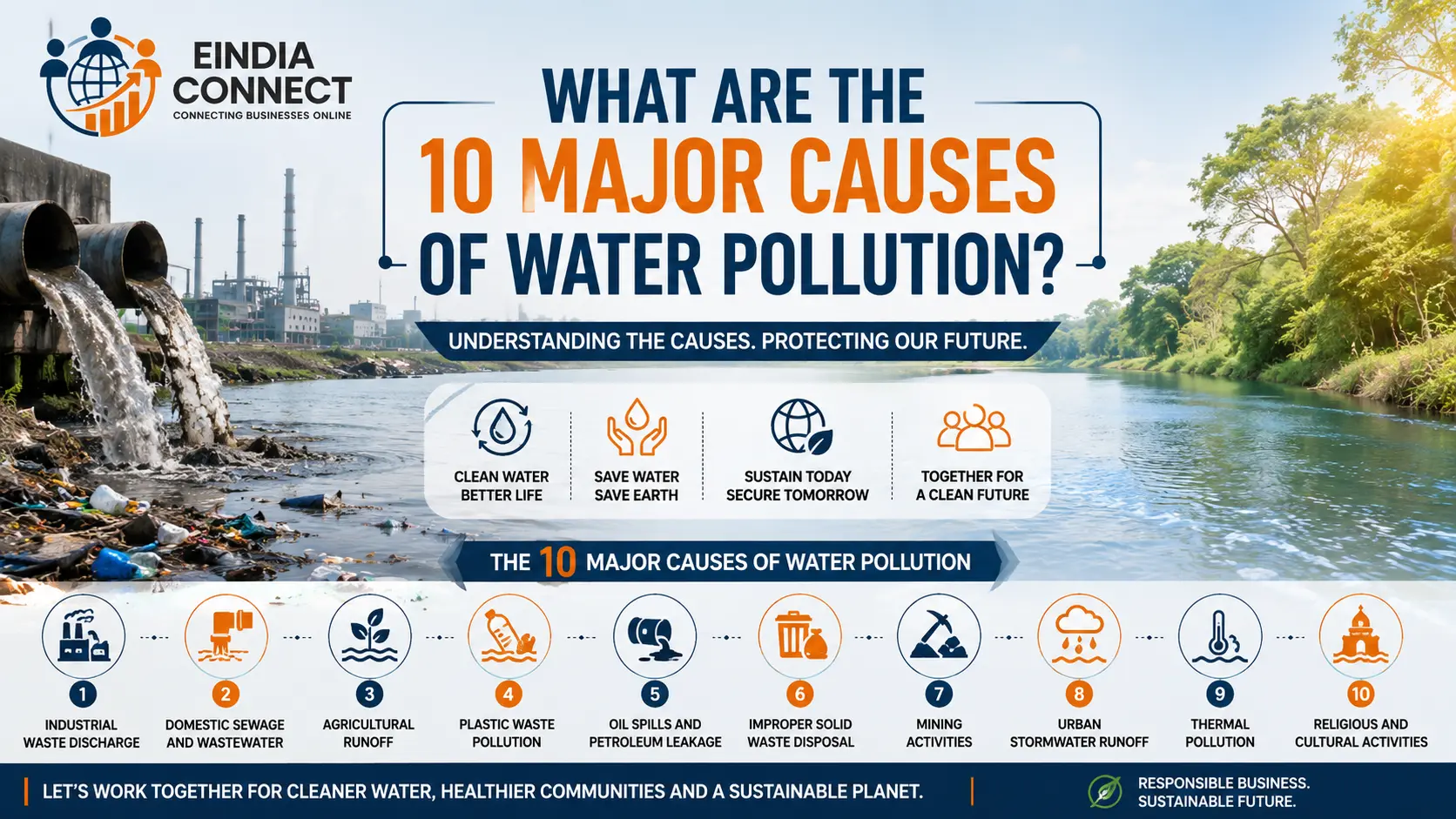
What Are The 10 Major Causes of Water Pollution?
Water is among the most important natural resources on our planet. Water is required for consumption, agriculture, industry, and maintaining ecological equilibrium. Unfortunately, rapid urbanization, growing industries, and other human activities pose grave threats when it comes to pollution of water bodies. Water pollution has emerged as a significant threat for today’s world, as our rivers, lakes, ponds, aquifers, and oceans are contaminated.
Understanding the major causes of water pollution is important for businesses, industries, environmental organizations, and individuals. As a leading B2B marketplace, E India Connect believes that awareness about environmental issues can help industries adopt sustainable practices and contribute to a cleaner future.
In this blog, we will discuss what are the 10 major causes of water pollution, understand about water pollution, and explore how different factors contribute to jal pollution.
Water Pollution Causes
Before discussing the causes, it is important to understand about water pollution.
Water pollution occurs when harmful substances such as chemicals, waste materials, microorganisms, or toxic pollutants contaminate water bodies. These contaminants degrade water quality and make it unsafe for human consumption, agriculture, industrial use, and aquatic life.
Water pollution affects public health, biodiversity, food production, and economic development. It can occur naturally, but most pollution today is caused by human activities.
1. Industrial Waste Discharge
Industrial waste is one of the largest contributors to water pollution worldwide. Many manufacturing facilities generate wastewater containing harmful chemicals, heavy metals, dyes, solvents, and toxic substances.
When untreated or poorly treated wastewater is discharged into rivers and lakes, it contaminates water resources and damages aquatic ecosystems.
Industries such as textiles, chemicals, pharmaceuticals, paper mills, and metal processing plants are often associated with industrial water pollution.
2. Domestic Sewage and Wastewater
One of the most common causes of jal pollution is the discharge of untreated domestic sewage into water bodies.
Household wastewater contains:
- Organic waste
- Detergents
- Soap residues
- Food particles
- Harmful bacteria
Without proper sewage treatment plant facilities, these pollutants enter rivers and lakes, reducing water quality and increasing health risks.
3. Agricultural Runoff
Modern agriculture relies heavily on fertilizers, pesticides, herbicides, and chemical treatments to increase crop production.
During rainfall or irrigation, these chemicals are washed into nearby water bodies, leading to contamination. Agricultural runoff can result in excessive nutrient accumulation, causing algae growth and oxygen depletion in aquatic ecosystems.
4. Plastic Waste Pollution
Plastic waste has become a major environmental challenge worldwide.
Improper disposal of plastic bags, bottles, packaging materials, and microplastics eventually finds its way into rivers, lakes, and oceans. Plastic pollution not only affects water quality but also poses serious threats to marine life and ecosystems.
Businesses and consumers must adopt responsible waste management practices to reduce plastic-related water pollution.
5. Oil Spills and Petroleum Leakage
Oil spills are among the most damaging forms of water pollution.
Petroleum products released from ships, offshore drilling operations, pipelines, and industrial facilities create a layer on the water surface that blocks oxygen exchange and harms aquatic organisms.
Even small oil leaks can significantly impact water quality and marine biodiversity.
6. Improper Solid Waste Disposal
Dumping garbage near water bodies is another major cause of pollution.
Solid waste such as:
- Food waste
- Packaging materials
- Construction debris
- Electronic waste
- Household garbage
can release harmful substances into water through leaching and runoff.
Proper waste segregation and disposal systems are essential for preventing water contamination.
7. Mining Activities
Mining operations often generate large amounts of waste materials containing toxic metals and chemicals.
Rainwater can carry these contaminants into nearby rivers and groundwater sources. Heavy metals such as mercury, arsenic, and lead can accumulate in water bodies and create serious environmental and health hazards.
Responsible mining practices are crucial for reducing pollution risks.
8. Urban Stormwater Runoff
Urban areas contain roads, parking lots, construction sites, and commercial facilities that accumulate pollutants over time.
During rainfall, stormwater carries:
- Oil residues
- Chemicals
- Dust
- Litter
- Heavy metals
into drainage systems and nearby water bodies.
As cities continue to expand, stormwater management becomes increasingly important for controlling water pollution.
9. Thermal Pollution
Thermal pollution occurs when industries discharge heated water into rivers, lakes, or reservoirs.
Power plants and manufacturing facilities often use water for cooling purposes. When hot water is released back into natural water bodies, it raises water temperatures and disrupts aquatic ecosystems.
Higher temperatures reduce dissolved oxygen levels and affect the survival of fish and other aquatic organisms.
10. Religious and Cultural Activities
In many regions, rivers and lakes are used for religious ceremonies and cultural events.
The immersion of idols, flowers, plastics, and other materials can contribute to water pollution. While these activities hold cultural significance, environmentally friendly alternatives can help reduce their impact on water resources.
Write Any Two Causes of Water Pollution
If someone asks to write any two causes of water pollution, the most common answers would be:
Industrial Waste
Industries often discharge chemical-laden wastewater into rivers and lakes, contaminating water and harming aquatic life.
Domestic Sewage
Untreated sewage from homes introduces harmful bacteria, organic waste, and pollutants into water bodies, making the water unsafe for use.
These are among the most significant contributors to water pollution globally.
Effects of Water Pollution
Water pollution has serious consequences for both humans and the environment.
Some major effects include:
- Spread of waterborne diseases
- Loss of aquatic biodiversity
- Contamination of drinking water sources
- Reduced agricultural productivity
- Economic losses for industries and communities
- Damage to marine ecosystems
- Increased water treatment costs
The long-term impact of pollution can affect future generations if preventive measures are not taken.
How Industries Can Help Reduce Water Pollution
Industries play a major role in protecting water resources.
Businesses can contribute by:
- Installing wastewater treatment systems
- Recycling industrial water
- Reducing chemical usage
- Following environmental regulations
- Adopting sustainable manufacturing practices
- Properly managing waste disposal
Through responsible operations, industries can significantly reduce their environmental footprint.
Role of B2B Platforms in Environmental Awareness
B2B marketplaces such as E India Connect help connect businesses with suppliers of environmental solutions, water treatment technologies, waste management systems, and sustainable products.
Companies can use digital platforms to discover innovative solutions that support environmental compliance and sustainable business growth.
Conclusion
Understanding about water pollution is essential for protecting our environment and ensuring the availability of clean water for future generations. The 10 major causes of water pollution include industrial waste, sewage discharge, agricultural runoff, plastic waste, oil spills, solid waste dumping, mining activities, urban runoff, thermal pollution, and certain cultural practices.
Whether discussing jal pollution or being asked to write any two causes of water pollution, it is clear that human activities are the primary contributors to this growing problem. Governments, industries, businesses, and individuals must work together to reduce pollution and promote sustainable water management practices.
By adopting responsible environmental practices and supporting sustainable solutions, we can protect valuable water resources and create a healthier future for all.