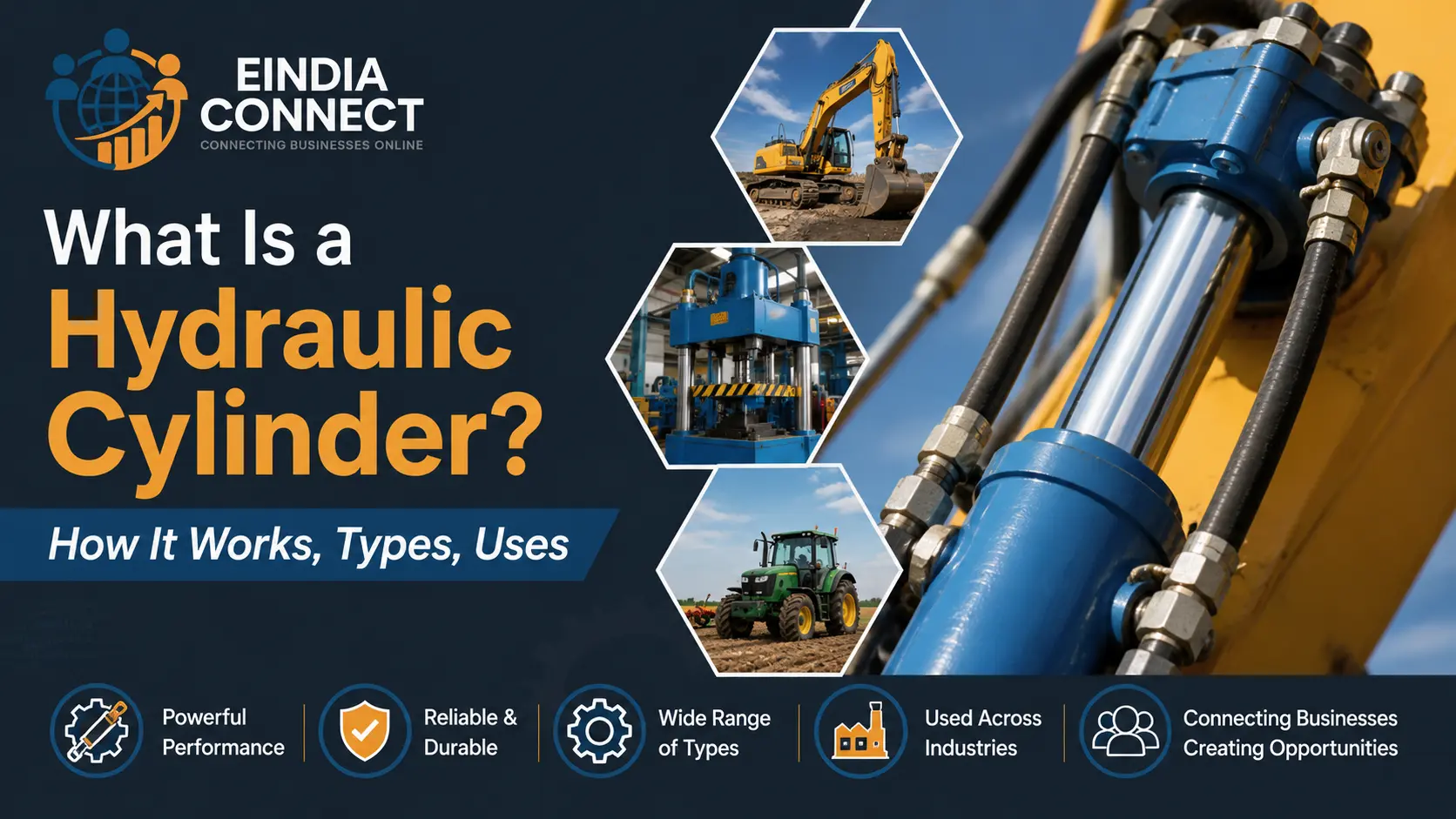
What Is a Hydraulic Cylinder? How It Works, Types, Uses
Hydraulic systems are the backbone of many industrial machines, construction equipment, agricultural vehicles, and manufacturing processes. One of the most important components of these systems is the hydraulic cylinder. Designed to convert hydraulic energy into linear mechanical force, hydraulic cylinders make it possible to lift, push, pull, press, and move heavy loads with ease.
From excavators and forklifts to hydraulic presses and industrial automation systems, hydraulic cylinders are used across a wide range of industries. As a leading B2B portal and marketplace, E India Connect connects buyers with trusted hydraulic cylinder manufacturers, suppliers, and industrial solution providers throughout India.
In this comprehensive guide, we will explain what a hydraulic cylinder is, how it works, its major components, different types, applications, and the benefits it offers to industrial users.
What Is a Hydraulic Cylinder?
A hydraulic cylinder is a mechanical actuator that uses pressurized hydraulic fluid to generate linear motion and force. It forms an essential part of hydraulic systems where powerful and controlled movement is required.
The cylinder consists of a cylindrical chamber, piston, piston rod, seals, and end caps. When hydraulic fluid enters the cylinder under pressure, it pushes the piston, creating motion that can be used to perform various industrial tasks.
Hydraulic cylinders are preferred in industrial applications because they can generate extremely high force while maintaining precise control and smooth operation.
How Do Hydraulic Cylinders Work?
The operation of a hydraulic cylinder is based on Pascal's Law, which states that pressure applied to a confined fluid is transmitted equally throughout the fluid.
The working process can be explained in the following steps:
Step 1: Hydraulic Fluid Pressurization
A hydraulic pump generates pressure and sends hydraulic oil through hoses or pipelines into the cylinder.
Step 2: Fluid Enters the Cylinder
The pressurized hydraulic oil enters one side of the cylinder chamber.
Step 3: Piston Movement
As pressure builds inside the cylinder, the piston begins to move. The piston rod attached to the piston extends outward.
Step 4: Force Generation
The movement of the piston rod creates mechanical force that is transferred to the machine or equipment.
Step 5: Retraction
To retract the piston, hydraulic fluid is directed to the opposite side of the piston. This pushes the piston back to its original position. This process allows hydraulic cylinders to perform heavy-duty operations efficiently and reliably.
How Does a Hydraulic Cylinder Work in Real Applications?
Hydraulic cylinders are integrated into machines where controlled force and movement are required. For example:
- Excavators use hydraulic cylinders to move booms and buckets.
- Hydraulic presses use cylinders to apply pressure during manufacturing.
- Forklifts use cylinders for lifting and lowering loads.
- Agricultural equipment uses cylinders for steering, lifting, and positioning.
The amount of force produced depends on:
- Hydraulic pressure
- Piston size
- Cylinder diameter
- Fluid flow rate
Because of this flexibility, hydraulic cylinders can be designed for both light-duty and heavy-duty applications.
Understanding Hydraulic Cylinder Components
To understand hydraulic cylinder performance, it is important to know the major hydraulic cylinder components.
1. Hydraulic Cylinder Barrel
The hydraulic cylinder barrel is the main body of the cylinder. It houses the piston and hydraulic fluid while maintaining pressure during operation.
The barrel must be manufactured with high precision to ensure smooth piston movement and long service life.
2. Piston
The piston divides the cylinder into separate chambers and converts hydraulic pressure into linear force.
3. Piston Rod
The piston rod transfers force from the piston to the external load or machine component.
4. End Caps
End caps close both ends of the cylinder and support the internal assembly.
5. Seals
Seals prevent hydraulic oil leakage and maintain pressure inside the cylinder.
6. Bearings
Bearings support the piston rod and help reduce wear during operation.
7. Hydraulic Ports
Ports allow hydraulic fluid to enter and exit the cylinder chamber.
All these hydraulic cylinder components work together to ensure efficient and reliable performance.
Importance of the Hydraulic Cylinder Barrel
The hydraulic cylinder barrel is one of the most critical structural elements of a hydraulic cylinder.
Its functions include:
- Containing hydraulic pressure
- Supporting piston movement
- Protecting internal components
- Ensuring operational efficiency
A high-quality barrel is usually manufactured using seamless steel tubes and precision honing techniques. This improves durability, reduces friction, and extends cylinder life.
In heavy-duty industrial applications, the quality of the hydraulic cylinder barrel significantly influences performance and maintenance requirements.
What Is an Oil Cylinder?
The term oil cylinder is commonly used as another name for a hydraulic cylinder because hydraulic systems operate using hydraulic oil.
An oil cylinder converts hydraulic oil pressure into mechanical force. The oil serves multiple purposes:
- Power transmission
- Lubrication
- Cooling
- Corrosion protection
Because hydraulic oil is nearly incompressible, it efficiently transfers energy throughout the hydraulic system.
Oil cylinders are widely used in industrial machinery, construction equipment, agricultural vehicles, and manufacturing systems.
Types of Hydraulic Cylinders
Different industries require different types of hydraulic cylinders depending on application requirements.
Single-Acting Hydraulic Cylinder
Single-acting cylinders use hydraulic pressure in only one direction.
Features:
- Simple design
- Lower cost
- Easy maintenance
Applications:
- Lifting systems
- Hydraulic jacks
- Agricultural equipment
Double-Acting Hydraulic Cylinder
Double-acting cylinders use hydraulic pressure on both sides of the piston.
Features:
- Bidirectional movement
- Greater control
- Higher efficiency
Applications:
- Industrial machinery
- Construction equipment
- Automation systems
Telescopic Hydraulic Cylinder
These cylinders contain multiple stages that extend sequentially.
Features:
- Long stroke length
- Compact retracted size
Applications:
- Dump trucks
- Cranes
- Material handling equipment
Tie-Rod Hydraulic Cylinder
Tie rods secure the cylinder assembly externally.
Applications:
- Manufacturing plants
- Industrial machinery
Welded Hydraulic Cylinder
Welded cylinders offer compact construction and high durability.
Applications:
- Heavy equipment
- Mining machinery
- Construction vehicles
Benefits of Hydraulic Cylinders
Hydraulic cylinders offer several advantages that make them indispensable in modern industries.
- High Force Output- Hydraulic cylinders can generate substantial force even in compact designs.
- Smooth and Controlled Operation- They provide precise motion control for industrial processes.
- Durability- Properly maintained cylinders can operate reliably for years.
- Versatility- Hydraulic cylinders can be customized for a wide variety of applications.
- Energy Efficiency- Hydraulic systems efficiently convert fluid energy into mechanical work.
- Low Maintenance- Modern cylinder designs are built for long service life and reduced maintenance requirements.
Industrial Applications of Hydraulic Cylinders
Hydraulic cylinders are used in almost every major industrial sector.
Construction Industry
Applications include:
- Excavators
- Bulldozers
- Cranes
- Backhoe loaders
Manufacturing Industry
Used in:
- Hydraulic presses
- Production machinery
- Automated systems
Material Handling Industry
Applications include:
- Forklifts
- Lift tables
- Conveyor systems
Agriculture Industry
Used in:
- Tractors
- Harvesters
- Sprayers
- Cultivation equipment
Mining Industry
Hydraulic cylinders power drilling machines, loaders, and heavy mining equipment.
Marine Industry
Applications include:
- Steering systems
- Lifting mechanisms
- Deck machinery
Automotive Industry
Hydraulic cylinders are used in manufacturing lines and vehicle maintenance equipment.
Factors to Consider When Selecting a Hydraulic Cylinder
When purchasing a hydraulic cylinder, buyers should evaluate:
- Load Requirements- Determine the amount of force needed for the application.
- Stroke Length- Choose the appropriate extension and retraction distance.
- Operating Pressure- Ensure compatibility with the hydraulic power unit.
- Mounting Configuration- Select the proper mounting style for the equipment.
- Environmental Conditions- Consider temperature, dust, moisture, and chemical exposure.
- Material Quality- High-quality materials improve performance and longevity.
Finding Hydraulic Cylinder Suppliers Through E India Connect
As a trusted B2B marketplace, E India Connect helps buyers connect with verified hydraulic cylinder manufacturers and suppliers across India.
Businesses can compare products, evaluate specifications, request quotations, and find suitable suppliers for various industrial applications. Whether you need standard hydraulic cylinders, customized oil cylinders, or specialized hydraulic components, the platform simplifies supplier discovery and procurement.
Conclusion
A hydraulic cylinder is one of the most important components in modern hydraulic systems. Understanding how do hydraulic cylinders work, how does a hydraulic cylinder work, the role of various hydraulic cylinder components, and the importance of the hydraulic cylinder barrel helps businesses select the right solutions for their operational needs.
From construction and manufacturing to agriculture and material handling, hydraulic cylinders provide the force, reliability, and efficiency required for demanding industrial applications. Through E India Connect, businesses can easily connect with trusted manufacturers and suppliers to source high-quality hydraulic cylinders and related industrial products.