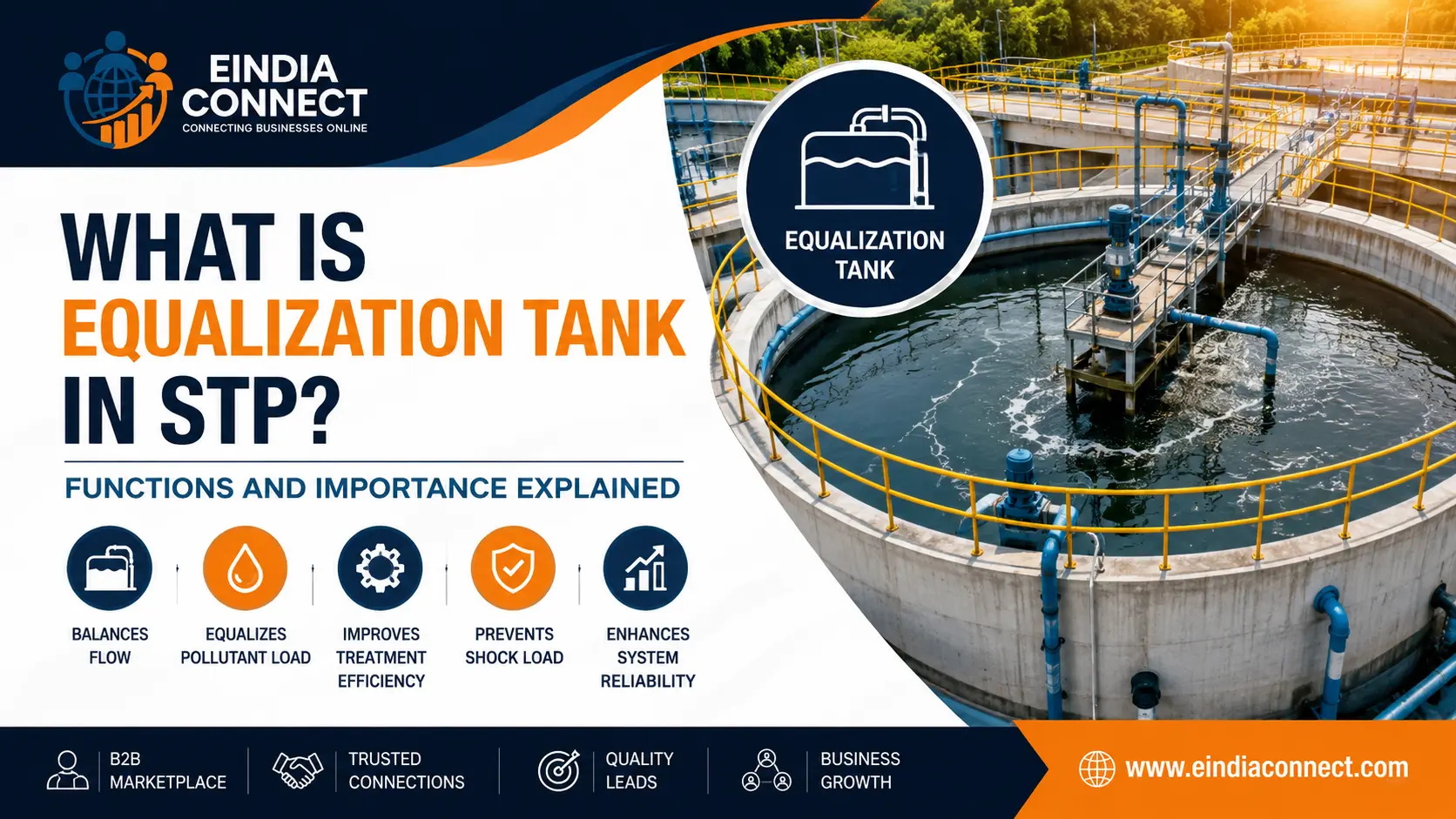
What is Equalization Tank in STP? Functions and Importance Explained
Efficient wastewater treatment is essential for industries, commercial establishments, residential complexes, hospitals, hotels, and municipalities. One of the most important components of any Sewage Treatment Plant (STP) or Effluent Treatment Plant (ETP) is the Equalization Tank. Although it often operates behind the scenes, it plays a crucial role in ensuring the smooth and effective functioning of the entire treatment system.
For businesses looking to invest in wastewater management solutions, understanding the role of an equalization tank can help improve treatment efficiency, reduce operational costs, and ensure regulatory compliance.
In this article, we will explain what an equalization tank is, its functions, working principle, advantages, and its importance in modern wastewater treatment systems.
What is an Equalization Tank?
An Equalization Tank is a storage and balancing tank used in wastewater treatment plants to collect wastewater before it enters the main treatment process. Its primary purpose is to equalize fluctuations in wastewater flow and pollutant concentration.
In simple terms, wastewater generated from industries, commercial facilities, or residential buildings does not always flow at a constant rate. During certain hours, the volume may be very high, while at other times it may be significantly lower. Similarly, pollutant concentrations may vary throughout the day.
The equalization tank helps balance these variations by storing wastewater temporarily and releasing it at a controlled and uniform rate to downstream treatment units.
What is Equalization Tank in STP?
Understanding the role of an equalization tank in STP is important because sewage flow from residential societies, office complexes, hotels, hospitals, and institutions is rarely consistent.
For example, sewage generation is typically higher during morning and evening hours when water consumption is at its peak. If this variable flow directly enters the treatment system, it can overload treatment units and reduce efficiency.
An equalization tank in STP helps stabilize these flow variations by collecting sewage and ensuring a steady flow to biological treatment processes. This improves overall treatment performance and enhances plant reliability.
What is Equalization Tank in ETP?
Industries often generate wastewater with varying chemical compositions, temperatures, pH levels, and contaminant concentrations. Such fluctuations can negatively affect treatment processes if wastewater is sent directly to the plant.
An equalization tank in ETP is designed to collect industrial effluent and homogenize its characteristics before treatment.
Industries that commonly use equalization tanks include:
- Pharmaceutical industries
- Food processing plants
- Textile industries
- Chemical manufacturing units
- Dairy plants
- Paper mills
- Beverage industries
The use of an equalization tank in ETP helps ensure consistent treatment conditions, protects equipment, and improves overall process efficiency.
Importance of Equalization Tank in Wastewater Treatment
The role of an equalization tank in wastewater treatment goes beyond simple storage. It acts as a critical buffer between wastewater generation and treatment operations.
Some key objectives include:
- Balancing flow fluctuations
- Equalizing pollutant loads
- Maintaining consistent treatment conditions
- Preventing hydraulic shock loads
- Improving downstream process performance
- Reducing operational disruptions
Without proper equalization, treatment plants may experience unstable operation, lower treatment efficiency, and increased maintenance requirements.
How Does an Equalization Tank Work?
The working principle of an equalization tank is relatively simple yet highly effective.
1. Collection of Wastewater
Wastewater from various sources is directed into the equalization tank instead of flowing directly to treatment units.
2. Temporary Storage
The tank stores incoming wastewater during peak flow periods.
3. Mixing and Homogenization
Mechanical mixers or aeration systems are often installed to keep wastewater uniformly mixed. This prevents solids from settling and helps maintain consistent characteristics.
4. Controlled Discharge
Wastewater is pumped from the tank at a controlled rate to subsequent treatment units.
This process ensures that treatment equipment receives a stable and manageable flow, improving operational efficiency.
Major Functions of an Equalisation Tank
The equalisation tank performs several important functions within wastewater treatment systems.
Flow Equalization
One of the primary functions is balancing sudden changes in wastewater flow rates.
Load Equalization
The tank helps distribute pollutant concentrations evenly throughout the treatment cycle.
pH Stabilization
Industrial wastewater often experiences pH fluctuations. Equalization helps moderate these changes before treatment.
Prevention of Shock Loading
Sudden increases in flow or contamination can damage biological treatment systems. Equalization tanks protect these systems by buffering fluctuations.
Improved Process Efficiency
A stable wastewater supply improves the performance of aeration tanks, clarifiers, filters, and other treatment units.
Components of an Equalization Tank System
A typical equalization tank system consists of several components designed to ensure efficient operation.
- Tank Structure- Usually constructed from reinforced concrete, steel, or FRP materials.
- Mixing System- Mechanical agitators or diffused aeration systems prevent solids settlement.
- Pumps- Transfer wastewater at controlled flow rates.
- Level Sensors- Monitor wastewater levels and control pump operation.
- Control Panel- Automates system functions and monitors performance.
These components work together to provide continuous and efficient flow equalization.
Benefits of Using an Equalization Tank
Installing an equalization tank provides several operational and economic benefits.
- Improved Treatment Efficiency- Uniform wastewater characteristics allow treatment processes to operate more effectively.
- Reduced Equipment Stress- Treatment equipment experiences fewer fluctuations, resulting in longer service life.
- Lower Operating Costs- Stable operations reduce energy consumption and maintenance expenses.
- Better Regulatory Compliance- Consistent treatment performance helps facilities meet environmental discharge standards.
- Enhanced Process Control- Operators can manage treatment conditions more effectively when wastewater characteristics remain stable.
Applications of Equalization Tanks
Equalization tanks are widely used across multiple sectors.
- Residential Sewage Treatment Plants- Used in apartment complexes, townships, and housing societies.
- Hotels and Resorts- Manage variable sewage flow generated throughout the day.
- Hospitals- Handle fluctuating wastewater loads from medical facilities.
- Industrial ETPs- Equalize industrial effluent characteristics before treatment.
- Municipal Wastewater Treatment Plants- Balance large-scale sewage flow variations.
These applications highlight the importance of equalization tanks in modern wastewater infrastructure.
Design Considerations for Equalization Tanks
Several factors must be considered while designing an equalization tank.
- Daily wastewater flow volume
- Peak flow rates
- Retention time requirements
- Wastewater characteristics
- Mixing requirements
- Available space
- Future expansion needs
Proper design ensures optimal performance and long-term reliability.
Future Trends in Wastewater Equalization Systems
As wastewater treatment technology advances, equalization systems are becoming smarter and more efficient.
Modern facilities now incorporate:
- Automated monitoring systems
- IoT-enabled sensors
- Energy-efficient aeration systems
- Remote operation capabilities
- Advanced process control technologies
These innovations help improve efficiency, reduce operational costs, and enhance environmental sustainability.
Conclusion
An Equalization Tank is one of the most critical components of any wastewater treatment system. Whether it is an equalization tank in STP, an equalization tank in ETP, or an equalization tank in wastewater treatment, its primary role is to stabilize flow and pollutant variations before treatment begins.
By acting as a buffer and balancing unit, the equalisation tank improves treatment efficiency, protects downstream equipment, reduces operational costs, and helps facilities achieve environmental compliance. As industries and municipalities continue to focus on sustainable wastewater management, equalization tanks will remain an essential part of modern treatment infrastructure.
For businesses seeking reliable wastewater treatment solutions, understanding the importance of equalization tanks is a valuable step toward improving operational performance and environmental responsibility.