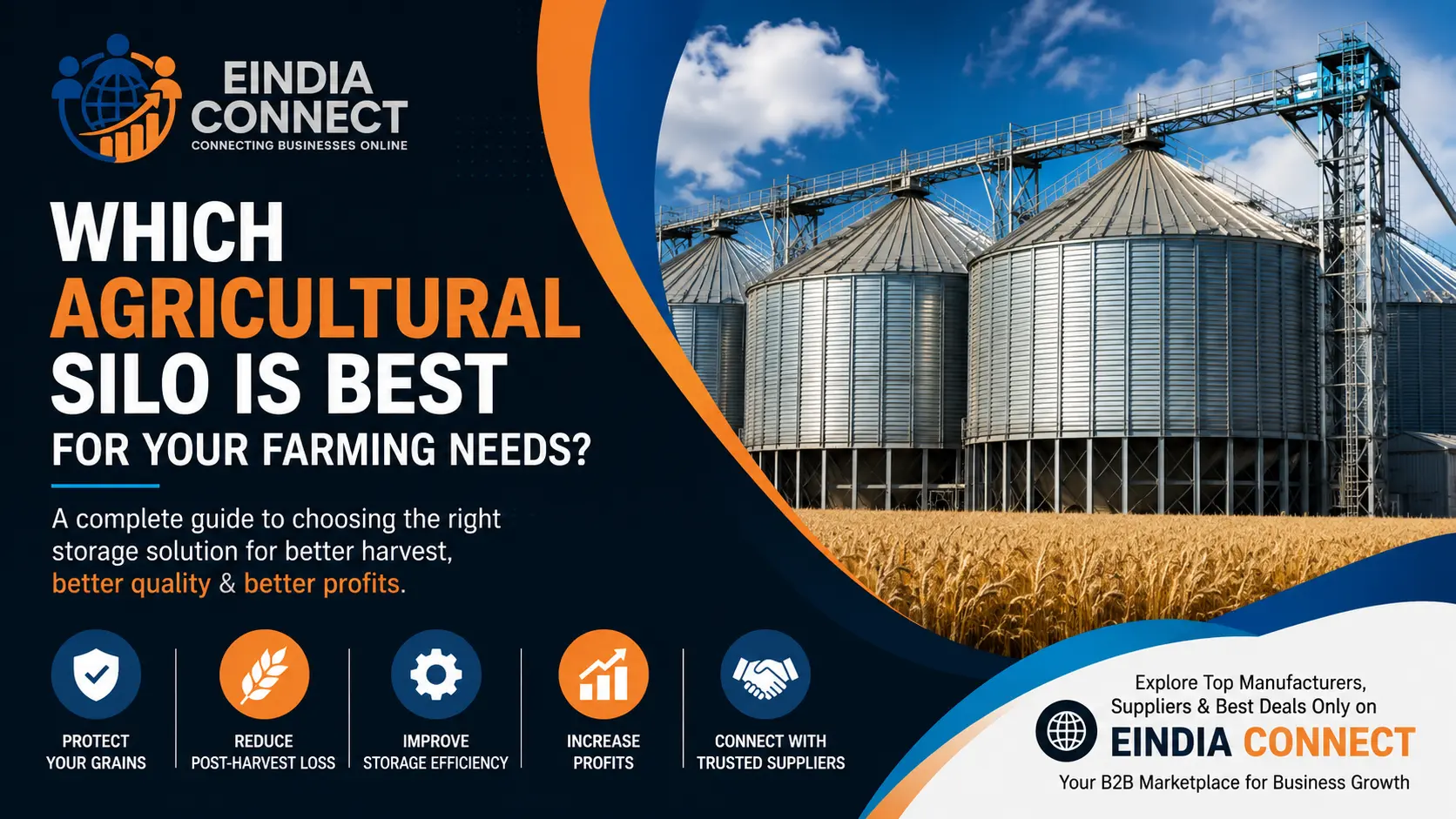
Which Agricultural Silo Is Best for Your Farming Needs?
Over time, agriculture has advanced considerably. Farmers and agribusiness today pay as much attention to maintaining the quality of the crops once harvested as they do to producing more yield. Good storage is paramount to minimizing loss and earning more money. In this context, agricultural silos should become your top priority.
Regardless of whether you are a farmer, grain broker, food processor, or agribusiness owner, making the proper choice when it comes to silos may be decisive for the quality, safety, and profitability of your stored grain. The fact is that there are many types of silos available on the market and choosing the best one may be tricky.
This guide aims to assist you in exploring the range of agricultural silos, learn more about their advantages, and pick the one most suitable for your business needs. We will also consider silos and granaries in detail and help you distinguish them from each other.
Why Proper Grain Storage Matters
After harvesting, grains remain vulnerable to several threats, including:
- Moisture damage
- Insect infestation
- Rodent attacks
- Mold growth
- Weather exposure
- Quality deterioration
Without proper storage, farmers can lose a significant portion of their harvest. Modern silo systems help protect grains and maintain quality for extended periods, making them an important part of modern agriculture.
What Is an Agricultural Silo?
An agricultural silo is a storage structure specifically designed to store bulk grains such as wheat, rice, maize, barley, and other agricultural products. Silos create a controlled environment that helps preserve grain quality while reducing losses caused by external factors.
Today, agricultural silos are widely used across farms, food processing facilities, grain trading businesses, and government storage projects.
Common Types of Agricultural Silos
Understanding the different types of silos is the first step in selecting the right storage solution.
1. Steel Grain Silos
Steel silos are among the most popular grain storage systems used worldwide.
Advantages:
- High durability
- Corrosion resistance
- Large storage capacities
- Easy maintenance
- Long service life
Steel silos are ideal for commercial farming operations and agribusinesses that require efficient large-scale grain storage.
2. Flat Bottom Silos
Flat bottom silos are designed for long-term grain storage and are commonly used in large agricultural facilities.
Best For:
- Large grain inventories
- Long storage periods
- Commercial grain handling operations
These silos offer excellent storage efficiency and are often equipped with advanced aeration and monitoring systems.
3. Hopper Bottom Silos
Hopper bottom silos feature a cone-shaped base that allows grains to discharge automatically through gravity.
Advantages:
- Faster unloading
- Reduced manual handling
- Better inventory management
They are commonly used in grain trading, feed manufacturing, and processing industries.
4. Concrete Silos
Concrete silos are permanent storage structures known for their strength and durability.
Benefits:
- Long lifespan
- Strong structural integrity
- Suitable for large storage capacities
Although they require higher initial investment, they provide reliable long-term storage solutions.
5. Bolted Silos
Bolted silos are assembled using prefabricated panels and bolts.
Advantages:
- Quick installation
- Easy transportation
- Expandable design
- Cost-effective construction
These silos are increasingly preferred by modern agricultural businesses because of their flexibility.
Silos and Granaries: Understanding the Basics
In relation to the storage of grains, the terms silos and granaries are used synonymously. But these two storage facilities are not quite similar. In the past, granaries were considered traditional forms of storage used to keep small quantities of harvested grains. Conversely, silos are modern designs that have been invented to store large amounts of grains in bulk. Despite having the same basic function, there are distinct differences between these storage facilities.
Difference Between Silos and Granaries
Understanding the difference between silos and granaries can help farmers choose the right storage option.
| Feature | Silos | Granaries |
|---|---|---|
| Storage Capacity | Large-scale storage | Small to medium storage |
| Construction | Steel, concrete, or metal | Wood, brick, or traditional materials |
| Protection | High protection against pests and moisture | Limited protection |
| Automation | Advanced monitoring systems available | Usually manual operation |
| Grain Handling | Mechanized loading and unloading | Mostly manual handling |
| Storage Duration | Long-term storage | Short to medium-term storage |
The major difference between silos and granaries is that silos are designed for modern bulk storage requirements, while granaries are generally used for traditional storage practices.
Factors to Consider When Choosing an Agricultural Silo
Every farm and agribusiness has unique storage requirements. Before investing in a silo system, consider the following factors.
Storage Capacity
Determine how much grain you need to store annually.
Questions to ask:
- What is your average harvest volume?
- Do you expect future expansion?
- Will you store multiple grain types?
Choosing the correct capacity prevents both underutilization and storage shortages.
Grain Type
Different grains may require different storage conditions.
For example:
- Rice
- Wheat
- Maize
- Pulses
- Soybeans
Understanding crop-specific requirements helps improve grain quality and shelf life.
Climate Conditions
Environmental factors play a major role in grain preservation.
Consider:
- Humidity levels
- Rainfall patterns
- Temperature fluctuations
Modern silos often include ventilation and aeration systems to manage climate-related risks.
Budget
Storage systems are long-term investments.
Evaluate:
- Initial installation costs
- Maintenance expenses
- Operational efficiency
- Expected lifespan
While lower-cost options may seem attractive initially, higher-quality silos often provide better long-term value.
Expansion Requirements
Many agricultural businesses grow over time. Bolted steel silos offer flexibility for future expansion, making them a practical choice for growing operations.
Benefits of Modern Agricultural Silos
Modern silo systems provide numerous advantages over traditional storage methods.
- Reduced Grain Losses- Advanced sealing and monitoring systems help prevent losses caused by insects, moisture, and rodents.
- Better Grain Quality- Controlled storage environments preserve nutritional value and market quality.
- Increased Profitability- Higher-quality grain often commands better market prices.
- Improved Inventory Management- Modern silos allow operators to monitor stock levels and storage conditions more efficiently.
- Enhanced Operational Efficiency- Automated loading and unloading systems reduce labor requirements and improve productivity.
Which Agricultural Silo Is Best for Your Farming Needs?
There is no single silo that suits every farming operation.
Small Farms
Small-scale farmers may benefit from:
- Compact steel silos
- Small hopper-bottom silos
- Modernized granary systems
Medium-Sized Farms
Medium-scale operations often require:
- Bolted steel silos
- Hopper-bottom silos
- Moderate storage capacities
Large Agribusinesses
Large agricultural enterprises typically choose:
- Flat bottom silos
- High-capacity steel silos
- Fully automated storage systems
The best choice depends on your production volume, budget, operational goals, and future growth plans.
Future of Agricultural Storage in India
The agricultural storage industry is rapidly modernizing. Smart technologies such as IoT sensors, automated monitoring systems, temperature control systems, and real-time inventory management are becoming increasingly common.
As food demand continues to grow, modern silos will play an even greater role in reducing post-harvest losses and improving supply chain efficiency.
Businesses listed on B2B marketplaces like E India Connect are increasingly adopting advanced storage solutions to strengthen their agricultural operations and improve competitiveness.
Conclusion
Choosing the right agricultural silo is an important decision that can significantly impact grain quality, operational efficiency, and profitability. While traditional silos and granaries both serve storage purposes, understanding the difference between silos and granaries helps farmers and agribusinesses make better storage decisions.
For most modern farming operations, steel and bolted silos offer superior protection, larger capacities, and improved efficiency. By carefully evaluating your storage needs, crop type, budget, and future growth plans, you can select a silo solution that supports long-term agricultural success.