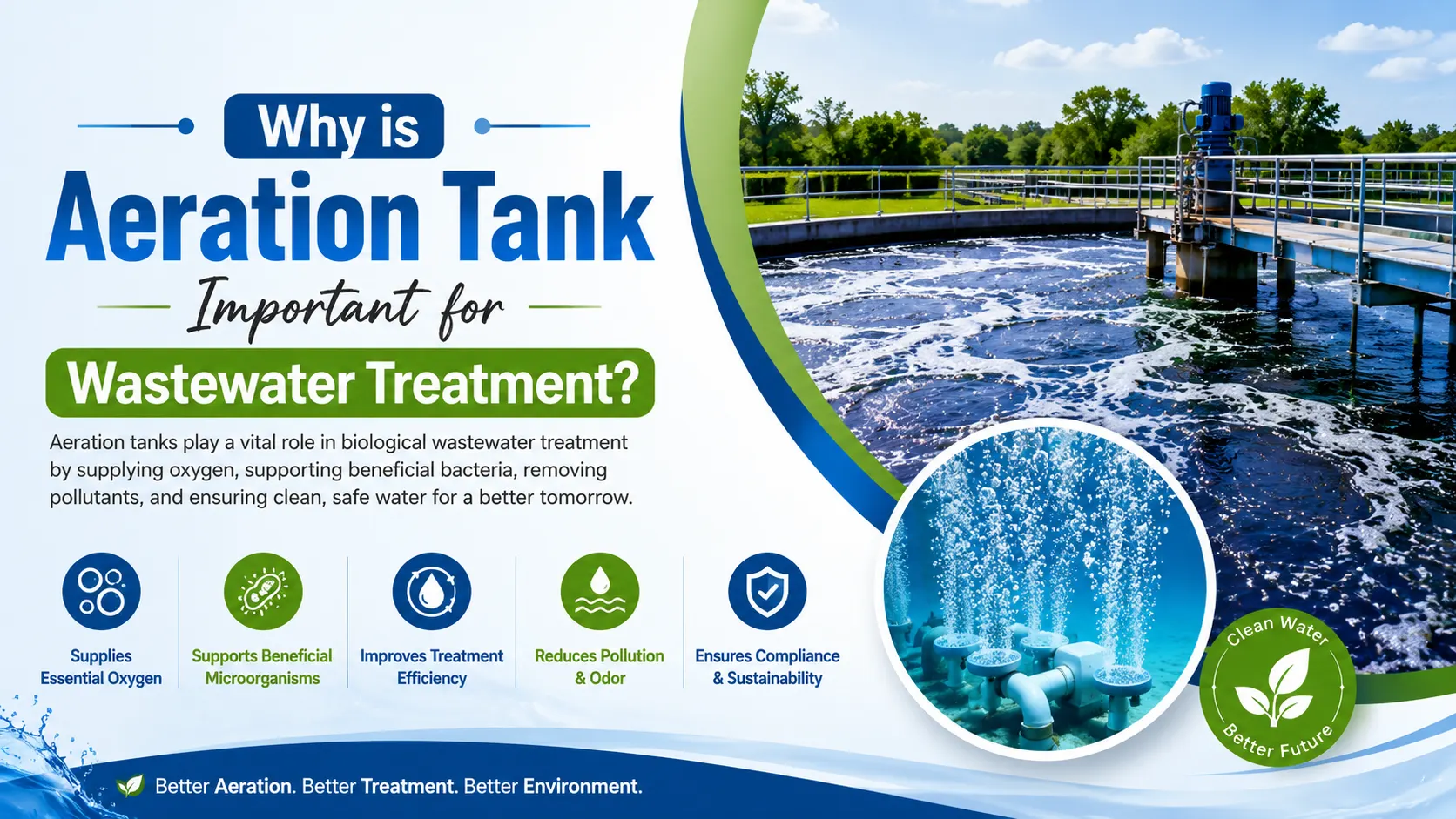
Why is Aeration Tank Important for Wastewater Treatment?
E India Connect, a leading B2B Portal and Marketplace, helps businesses connect with trusted manufacturers, suppliers, and service providers across various industries. Among the many industrial solutions available today, wastewater management remains one of the most critical requirements for industries, commercial establishments, and municipalities. An essential component of every biological treatment system is the aeration tank, which plays a major role in improving water quality and ensuring effective wastewater treatment.
The success of any treatment plant largely depends on efficient wastewater treatment aeration. Without proper oxygen supply, microorganisms responsible for breaking down pollutants cannot function effectively. This is where aeration tanks become the heart of the treatment process.
Understanding the Purpose of an Aeration Tank
An aeration tank is a specially designed chamber where wastewater is mixed with air to support the growth of beneficial microorganisms. These microorganisms consume organic contaminants and convert them into harmless substances such as carbon dioxide, water, and biomass.
The process of aeration in wastewater treatment creates an oxygen-rich environment that allows aerobic bacteria to thrive. As these microorganisms digest pollutants, the overall quality of wastewater improves significantly before it moves to the next stage of treatment.
In simple terms, an aeration tank wastewater treatment system acts as a biological reactor where nature-based treatment occurs through microbial activity.
What is Wastewater Treatment Aeration?
Wastewater treatment aeration refers to the process of introducing oxygen into wastewater through mechanical aerators, blowers, or diffused air systems. Oxygen is one of the most important elements required for biological treatment because aerobic microorganisms depend on it to survive and multiply.
When wastewater enters the aeration tank, air is continuously supplied to maintain dissolved oxygen levels. This process encourages bacteria to break down organic waste more efficiently, reducing pollution levels in the water.
Why Aeration Tanks are So Important
Supports Biological Treatment
The primary role of an aeration tank is to support microbial activity. The microorganisms present in the tank require oxygen to decompose organic matter. Without sufficient oxygen, biological treatment becomes inefficient and wastewater quality deteriorates.
Reduces Organic Pollution
Industrial and domestic wastewater contains high levels of biodegradable organic contaminants. Through proper wastewater treatment aeration, bacteria consume these pollutants and significantly reduce Biological Oxygen Demand (BOD) and Chemical Oxygen Demand (COD).
Improves Treatment Efficiency
An efficient aeration tank wastewater treatment system enhances overall plant performance. Continuous oxygen supply accelerates biological reactions, enabling faster and more complete treatment of wastewater.
Prevents Odor Formation
Proper aeration in wastewater treatment prevents these conditions by maintaining healthy oxygen levels throughout the treatment process. This creates a cleaner and safer working environment around the treatment facility.
Promotes Nutrient Removal
Modern wastewater treatment plants are often designed to remove nutrients such as nitrogen and phosphorus. Effective aeration treatment supports biological nutrient removal processes, helping facilities meet stringent environmental regulations.
How Aeration Tanks Work
The operation of an aeration tank involves a series of coordinated processes.
Step 1: Wastewater Entry
Untreated wastewater enters the aeration tank after preliminary treatment stages.
Step 2: Oxygen Introduction
Air is introduced into the tank through diffusers or mechanical aerators. This ensures continuous oxygen transfer into the wastewater.
Step 3: Microbial Activity
Aerobic bacteria utilize the oxygen to break down organic pollutants and convert them into stable compounds.
Step 4: Continuous Mixing
The aeration process keeps wastewater and microorganisms thoroughly mixed, maximizing treatment efficiency.
Step 5: Clarification
After biological treatment, the wastewater moves to a clarifier where solids settle and treated water proceeds for further processing or discharge.
This entire sequence highlights the importance of aeration in water treatment systems worldwide.
Benefits of Aeration in Water Treatment
The advantages of aeration in water treatment extend beyond wastewater purification.
- Better Water Quality: Aeration helps remove contaminants, resulting in cleaner treated water suitable for discharge or reuse.
- Enhanced Oxygen Levels: Increased dissolved oxygen supports biological processes and improves overall treatment effectiveness.
- Reduced Environmental Impact: By improving treatment performance, aeration helps prevent pollution of rivers, lakes, and groundwater resources.
- Increased System Reliability: Modern aeration tank wastewater treatment systems provide consistent performance even when wastewater characteristics fluctuate.
- Improved Water Reuse Opportunities: Properly treated wastewater can often be reused for irrigation, landscaping, cooling systems, and industrial applications, reducing freshwater consumption.
Applications of Aeration Tanks
Aeration tanks are widely used in numerous sectors, including:
- Municipal sewage treatment plants
- Food and beverage industries
- Pharmaceutical manufacturing units
- Textile processing facilities
- Dairy industries
- Chemical manufacturing plants
- Residential townships
- Hotels and commercial complexes
In all these applications, effective wastewater treatment aeration plays a crucial role in maintaining environmental sustainability.
Choosing the Right Aeration System
Several factors influence the selection of an aeration system, including:
- Wastewater characteristics
- Treatment capacity
- Available installation space
- Energy efficiency requirements
- Maintenance considerations
- Regulatory compliance standards
Selecting the right system ensures maximum performance and long-term operational savings.
Conclusion
Aeration tanks are among the most important components of any biological wastewater treatment facility. They provide the oxygen necessary for microorganisms to remove pollutants, improve water quality, and support environmental protection. Through efficient wastewater treatment aeration, treatment plants can achieve superior performance while reducing operational challenges.
As a trusted B2B Portal and Marketplace, E India Connect helps businesses discover reliable wastewater treatment solutions and industry-leading suppliers that support sustainable water management practices. Effective aeration treatment and advanced aeration in water treatment technologies continue to play a key role in creating a cleaner and healthier environment for future generations.